Home › Answered Needs › Dear self, forgive me for every time I made you feel ashamed of how much you cared
Dear self, forgive me for every time I made you feel ashamed of how much you cared
“dear self,
forgive me for every time i made you feel ashamed of how much you cared. you were sincere in your affection and hopeful about the people you gave it to. i wish i had been more understanding of the tenderness in you that wanted so badly to be received with tenderness.”
About eight hours earlier, they had posted another letter to themselves:
“dear self,
forgive me for the years i spent making my heart available to people who were careless with it. i was young in ways that had very little to do with my age. there was so much about affection that i was still learning, and i believed people when they told me they loved me.”
A letter addressed to the person writing it. After the greeting, three sentences. The first asks forgiveness for “every time i made you feel ashamed of how much you cared.” The second takes the side of the one being written to: “you were sincere in your affection and hopeful about the people you gave it to.” The third is a wish, and it holds the tenderest phrase in the letter: “the tenderness in you that wanted so badly to be received with tenderness.”
The earlier letter asked forgiveness for having given the heart at all, for “making my heart available to people who were careless with it.” The later one asks forgiveness for the shame. Somewhere in those eight hours, the apology changed direction.
If you arrived here because you, too, feel embarrassed by how much you care about people, this page is for you. Two pairs of things sit very close together in these letters. Shame treats each pair as one thing. They come apart.
Caring too much is not the same as caring where it wasn’t received
“Ashamed of how much you cared” makes it a question of amount, as if caring had a correct size and theirs ran over it. But the letter itself describes something else. Not too much. Sincere. Hopeful. Given to particular people.
And the earlier letter describes those people too: “people who were careless with it.” Careless is the right word, and it points away from the writer. The care was theirs. The carelessness belonged to someone else.
Shame takes the second and bills it to the first. It looks at what came back, sees almost nothing, and concludes that what went out must have been too much. But a gift handed to someone who drops it was not too large. It was dropped. How much you cared was never measured by how much came back.
Levi M. Johnson names what shame costs the person who carries it:
Unresolved shame and regret will steal your voice, disabling you from truly being able to be yourself, and making it much harder to enter into and cultivate deeply authentic relationships with people.
Steal your voice. Years of being ashamed of caring do exactly that. They teach a person to care quietly, to apologize for it, to hold it like something that might embarrass them in public. That is why the second sentence of the letter matters so much. “you were sincere in your affection” is not an apology. It is testimony, given in a voice that is coming back.
Wanting to be received is not the same as asking too much
Shame has a word ready for the last sentence of the letter. Needy. Too much. Desperate. It may let the giving pass, but it calls the hoping to be met in return the embarrassing part.
What the tenderness wanted, though, was small. Not to be worshiped. Not to be paid back with interest. To be “received with tenderness.” To be answered in the same language it spoke. That is not asking too much. It is the ordinary shape of love between two people, when both of them are able.
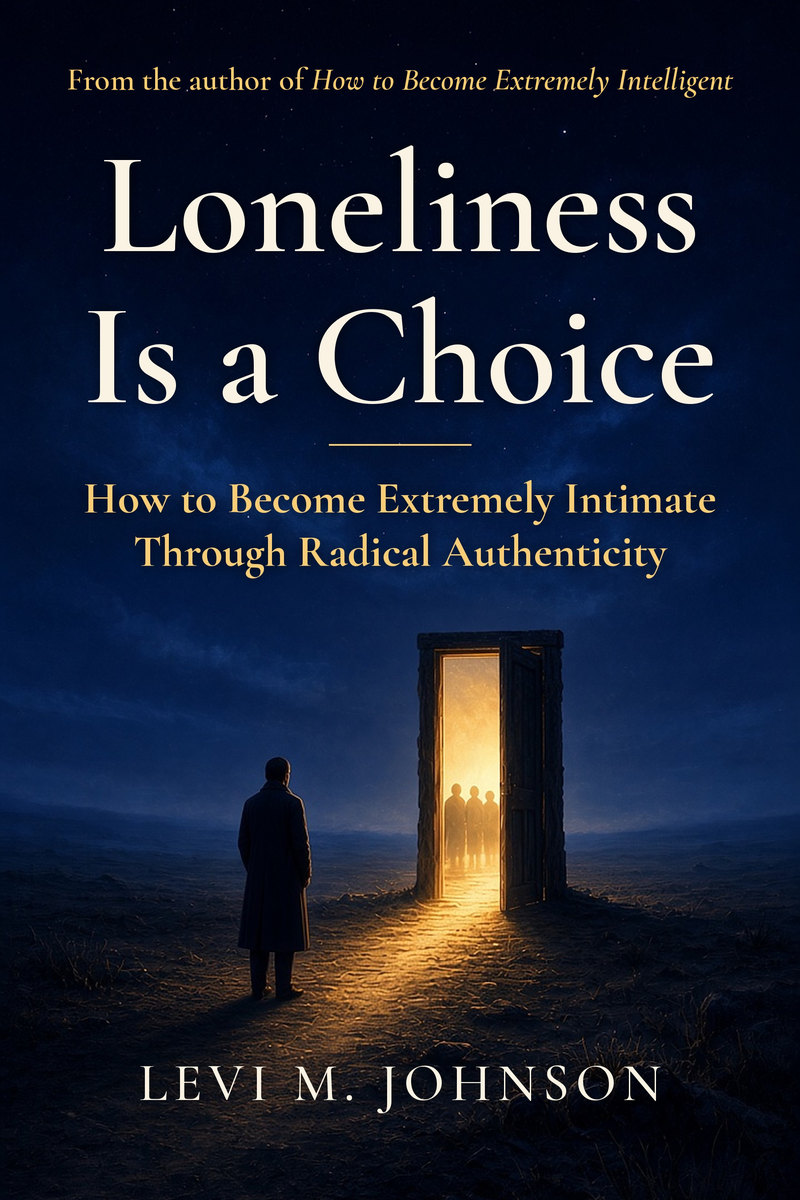
The wanting is not a flaw in the caring. It is the part of caring that risks something. In Loneliness Is a Choice, Levi puts it in six words:
Deeply authentic relationships are built on vulnerability.
Someone who gives and hopes for nothing is protected. Someone who gives and hopes to be received has left a door open. That open door is where closeness happens. It is also where careless people walked in and broke things. Both are true, and the second does not make the door a mistake.
Shame does not only teach people to be embarrassed by their own tenderness. It also teaches them to turn away the tenderness of others. Levi tells this one on himself:
One time, I was dating a lady who was really fond of me, and who got really excited when we were in public about the kind of man I was. A little while later, because I didn’t accept her excitement about the kind of man I was, I basically shut her down because I didn’t believe I deserved to be loved.
He did not believe he deserved to be loved, so the love coming toward him had nowhere to land. Being ashamed of the tenderness you give and being unable to take in the tenderness you are given grow from the same root, and the root is not that anyone cared too much.
Which is why the form of these posts matters. They are not vows or resolutions. They are apologies, from one part of a person to another. In the same book, Levi gives a whole section a heading that could describe the later letter: “Forgiving Yourself to Remove Shame and Regret as an Act of Self-Love.” And he says what that forgiveness opens up:
The more you forgive yourself for real or perceived mistakes, sins, or errors, the easier it is for you to believe you deserve to be loved by other people, and to receive love from yourself and from God.
He also writes, “Since you are a child of God who was created by God, you deserve to be loved.” and then adds, “But, in a major sense, the first person to validate that truth is you.” A letter that begins “dear self” and ends by taking the side of its own tenderness is that validation, written down. The one who shamed the caring and the one who cared are the same person, and one day in November, one of them said sorry to the other.
Neighboring pages here: It’s naive to think generosity gets you loyalty, Being a people pleaser is a form of self-neglect, and I feel rejected even though no one’s rejected me.
Going deeper
Loneliness Is a Choice, by Levi M. Johnson, is about building deeply authentic relationships: loving yourself, removing shame, and learning both to give and to receive. Its chapter on loving yourself ends here:
In your relationships, you find home in the giving and taking, and so does your interlocutor if they are healthy and functional.
Caring too much is not the same as caring where it wasn’t received. Wanting to be received is not the same as asking too much. Both were already in two letters written on one day, by someone who was sincere, and hopeful, and by the later letter was on their own side.
If one distinction helped, the book goes further into shame, self-love, and closeness that can hold tenderness: Loneliness Is a Choice · Amazon → · Buy the ebook with Bitcoin (Lightning) → · Browse the books →
This page is part of answered needs at FikaTimeBooks.com — real questions, real answers, no squeeze.
Trade your email for the Introduction and Chapter 1 of the book you choose.
You'll receive the Introduction and Chapter 1 of the book you choose, plus occasional emails from FikaTimeBooks.com. Unsubscribe anytime. We never share your email.
Also on loneliness: It’s naive to think generosity gets you loyalty · Being a people pleaser is a form of self-neglect · I feel rejected even though no one's rejected me · More in Loneliness: Granular Insights