Home › Granular Insights › Loneliness › How to Trust People You Can’t Trust
How to Trust People You Can’t Trust
Building Interpersonal Trust: An In-Depth How To
Part 1: What Is Interpersonal Trust?
Understanding the Problem
Whether in personal or business relationships, a lack of building interpersonal trust costs us broken hearts, confusion, misunderstandings, and misinterpreting of other people and the way they do things, and the potential for a larger income.
People in society often begin with distrust to greater or lesser degrees, which leads to painful and frustrating disconnects in communication and misunderstood intentions.
A world where people don’t trust one another, whether women and men, different ethnicities, different cultural norms and patterns of behavior, and different languages is a world where people separate and where it’s harder to partner in business to make money.
Disconnection from one another makes life harder to live even to the point of death, leading to conflict in the workplace, in society, and at home. Since governments are composed of people, distrust between governments and nations is actually distrust between individuals, the men, and women who have made and still make choices that lead to the flourishing or destruction of millions of individuals, women, men, and families.
The fate of you, your family, your city and nation, and humanity for good or ill rests on trust.
With trust, we flourish and thrive and dreams and aspirations come true.
Without trust, we die. Marriages die, friendships disintegrate, businesses fail, and governments drag nations into war.
Therefore, to improve how people relate to one another in these contexts you need to understand what trust is, and how it works so that you can use it to improve your connections and help to solve the distrust problem.
You Can't Understand Trust Without Understanding Truth
Building interpersonal trust is fun! But what is trust really?
People often perceive trust as being some intangible that they aren’t able to put into words. They might say something like, “I know it when I see it.”
If truth means “nothing hidden,” then trust has two perspectives in interpersonal relationships. One part of trust is what you can choose, and the other part of trust is, to a certain degree, what the other person in the relationship decides.
What is Trust in Interpersonal Relationships, really?
The 1st Perspective
Trust that you chose means, “I speak truth.” This means that to the degree of the commitment within the relationship, you do not inappropriately withhold secrets about yourself and your life from the other person. This is commitment and contextually driven and is key to building interpersonal trust.
One time I and my now ex-wife were in marriage counseling with her pastor. Things seemed to be going well until he said something she and I disagreed with. He said, “If one of you accidentally commits adultery, and you’ve made it right before the Lord, then don’t tell each other about it because it will just cause more pain.”
My future spouse and I sort of glanced warily towards each other thinking the same thought. “What the hell is this guy talking about?”
As soon as we were walking to the car we both expressed our incredulity about that pastor’s comment. Why? Because we both instinctively knew hiding infidelity from the other was a betrayal of the relationship. Our intimate commitment to each other meant that hiding secrets, let alone adultery ( ! ) would not be in accordance with the realistically expected nature of a spousal connection. Put another way, spouses don’t keep secrets from each other.
What this means in practice is that I tell my spouse the truth about what I think, how I feel, what I’ve done, what I’m going to do, what I need, and what I want courageously and kindly.
(Courage in building interpersonal trust means telling truth directly, and kindness means speaking truth gently, with minimum necessary force, tact).
If my wife asks me how I’m feeling, I say what I’m feeling by saying, “I feel happy/angry/sad/scared/good/frustrated/excited.” Whatever word best matches how you feel is the word you use. If you feel good you say, “I feel good.” If you feel bad you say, “I feel bad.”
But you do NOT say, “I am sad/scared/mad/happy” because your identity is not your feelings. That would not be telling the truth and does not help in building interpersonal trust.
Another time I heard the story of a man whose wife wanted him to go out with her friends to a movie. The husband didn’t want to go with her friends to the movie, but he said yes anyway because he was acting nice.
Later in resentment and frustration before the movie started he blurted out a major spoiler in the movie to one of his wife’s friends to punish him for “making” him go to the movie. The only problem here is, no one made him attend the movie with his wife’s friends. He could have simply told the truth instead of lying to “be nice.”
He could have said, “Hey, I really appreciate the invitation, but honestly I don’t want to watch this movie. But I hope you guys have a great time.” This kind and courageous “No” would have saved him from resentment and anger because he would have been open and honest with himself, with his wife, and with her friends.
There is nothing kind and courageous about treating other people nicely when it means not speaking truth about what you want and being disingenuous with yourself.
Therefore the first part of trust is speaking truth kindly and courageously. But this definition is not yet complete. Let’s expand it.
What Is Trust in Interpersonal Relationships, really?
The 2nd Perspective
When you have a relationship with someone personally or professionally, each day and moment of interaction with them is a sort of mental history book which you use to interpret future interactions with them.
If your spouse has a rough day and snaps at you, rapidly you refer to your mental history book in search of whether you still want to stay connected to them, and if you decide to stay connected at that moment, then you use your history with them to give yourself an explanation about them snapping at you, in a small sense you forgive them, and then you continue with the interaction in a spirit of compassion knowing that something is going on with them.
At that moment, you probably seek to understand how they’re feeling and why because you genuinely want them to feel better (and for them to stop snapping at you!).
There are two beliefs you carry about all people. One belief is, “This person intends the best for me.” And the other belief you carry is, “That person does not want the best for me.”
In the previous example, if you choose to stay meaningfully engaged with your spouse after they snapped at you, and after you referenced the mental history book of your relationship with them, then you have decided, “Even though I had this negative interaction with him/her, I still choose to believe they want good for me.”
And that is the second definition of trust. “I choose to believe you want the best for me.” When you and other people want the best for one another, it goes a long way to building interpersonal trust.
What Building Interpersonal Trust Really Is and Isn't
Now we have two clear definitions of trust in interpersonal relationships.
I speak truth (nothing hidden) to you kindly and courageously.
I choose to believe you want the best for me (no matter what). (John Gottman gives a thorough treatment of this type of trust in his excellent book The Science of Trust, which I highly recommend.
When both of these beliefs are acted upon with trustworthy people, then you feel connected to the other person in the relationship and building interpersonal trust has taken place.
When these beliefs are not believed and acted upon, there is no trust in the relationship.
Building Interpersonal Trust In A Professional Context
If you have chosen to believe someone wants the best for you, and you speak truth to them, there is a final major part to the trust in your relationship, especially in the professional world.
Let’s say you know a dentist named Brad from church. You have a cavity and need to get it fixed and Brad is the first person who comes to your mind. You’ve seen Brad around church on Sundays for several months. You’ve seen how he kindly and courageously communicates with the men and women in the small group you both attend. You’ve even had some meaningful conversations with him that have left a positive impression of him and who he really is.
Clearly, you can trust him.
Knowing this, you think, “Maybe I can get Brad to fix my cavity.”
But before you call his office to make an appointment, you check the reviews people left for him and his dental practice on Google Reviews.
Uh oh. Brad and his practice have a 3.5-star review out of five in total. You think, “Well, let’s see what people have to say.”
It becomes clear to you that Brad and his practice have a hit or miss track record. You know from church, small group, and one on one interactions with Brad that he has a good character. But in terms of his dental practice, he lacks the competence to provide excellent service. So you opt to find another dentist who is more highly competent.
We have already discussed the character part of trust, that is, “I believe you want the best for me,” and “I speak truth to you.”
But another part of trust is, “I feel confident you have the skills to do your job well.”
In a business transaction, you want both parts of trust to be excellent. Character and competence. You want your lawyer, therapist, restaurant, colleague, to have character but if they don’t have the skills to do their job well then no matter how much you trust them personally, you can’t trust them professionally.
A friend of mine works as a dental hygienist in a dentist’s office, and she offered to get me an appointment with her boss to get a cavity fixed.
Laying back in the dental chair with him about to drill and fix my cavity, I tested him to see if he was a competent dentist.
“Are you good?” I questioned him.
“No, I’m not good at all,” he quipped sarcastically.
I was tempted to get out of the chair and leave because I don’t like when people punish me for asking a tough but fair question. But I slowed my breathing and allowed the dentist to fix my cavity.
I later told my friend about our interaction, and she confirmed my question wasn’t out of place.
What was I doing when I questioned the dentist’s skill level? People who are excellent at what they do know it, and feel confident in their skills. If the situation requires it, they can express confidently the sentiment, “Yes, I’m good at what I do.”
I knew his sarcasm meant he was probably pretty good, but that he didn’t like my question. So I allowed him to proceed. But because of his sarcasm in response to his insecurity, I wouldn’t select him as a friend because clearly his character needs some work.
Professional trust is character (they want the best for you, they speak truth), and competence (they have the necessary experience and skill to be one of the best at their job.)
The Components of Building Interpersonal Trust
Since trust is imperative for personal and professional relationships, you now clearly understand the necessary components to building interpersonal trust between you and other people. You now understand that if you choose to speak truth courageously and kindly to other people without omitting secrets that you should disclose in the context of that relationship, you are building interpersonal trust.
If you at home or at work have done your due diligence to make sure you intend the best for other people (and yourself), that you speak truth (to yourself and to other people), and that you’re highly skilled in your professional capacity, then it’s likely you are building interpersonal trust with the people you interact with in those contexts.
Continue to Part 2: How to Build Interpersonal Trust
Part 2: How to Build Interpersonal Trust
How to Develop Trust with Anyone
We’ve discussed why cultivating trust is important (the problem), the two kinds of trust in personal relationships (speaking truth and intending the best for other people, and yourself too :), and the two broader types of trust in professional contexts (character and competence. The Speed of Trust by Steven M.R. Covey goes in depth on character and competence. I highly recommend his book.).
Now that you understand why relational trust is important, and what trust is, it’s time to dig into the how of trust-building with people.
Buckle up, 'cause it’s about to get fun!
Two Ways to Cultivate Interpersonal Trust with People
Words and Actions
Using words and actions, you can build interpersonal trust with any person. Some people are words people and others are actions people, broadly speaking. As you know, most people are some mix of words and actions in terms of how they receive and give messages.
You are probably aware that about 70% of communication between people is non-verbal (action). For certain personality types, this number can be even high. A former mentor said about 90% of what I communicate is non-verbal! This is ironic considering how much I enjoy using words to communicate.
If a good friend of yours asks, “How are you?” they probably meant it. They genuinely desire to understand how you are doing emotionally and in life. The length of the answer they want may vary dependent on the context (in a group of people vs one on one), but based on what you observe of their body and the sense you derive from it, for instance, an open posture vs a closed posture, you will be able to tell whether or not they will be able to receive your message and understand it intellectually as well as emotionally.
With your good friend, their body language is a strong indication of the intent of their question. If their body is calm and their eyes and head are turned towards you, then you judge they want an authentic answer.
But if their body isn’t at peace and even carries a bit of manic energy, while their eyes aren’t focused on you and their head turns away from you towards their smartphone before you can answer their question, then you judge that even if they want a genuine answer to your question, you can tell their thoughts and emotions are probably (though not certainly) in a different place and that you’d better keep your answer relatively brief.
You instinctively grasp that in some sense, actions are more powerful than words at communicating. If you don’t believe me, try this.
Turn on a TV show or movie and watch it with the sound off and see if you can guess what they are talking about. You may find you can decipher most of the storyline, at least in broad strokes, based solely on their body language. Then re-watch the show with the sound on and see how close you were in your predictions of what they were talking about. It’s shouldn’t be too hard for you to accurately guess the meanings of their communications based on their body language.
Although actions play an influential role in interpersonal communication, words are not insignificant.
What words you use and how to use them, depending upon the social interaction style of the listener, will determine if they can receive your verbal messages.
Oftentimes, HOW you use words is as if not more important than what words you’re using.
When I taught English in China, I would often illustrate the reality of how words are communicated changed the meaning of the words.
I would start by saying, “How are you doing?” using a gentle, open tone.
Then I would shift to using a seductive tone, “How are you doing?”
Then I would shift to an angry/sarcastic tone, “How are you doing?”
Enviably the university students would have a good laugh and chuckle at the way I manipulated HOW I spoke the question.
So not only is it important to learn what words to use with action, but it’s also important to learn how to use those words.
Action Building Interpersonal Trust
Make Your Actions Match Their Words
The basic way to build interpersonal trust (character and competence) with any person is to make your action match the words. Notice I didn’t say your words. I said The words. What do I mean?
You’ve probably heard axioms like, “Be impeccable with your word,” or “Make your actions and your words the same.” You are probably already family with this strategy for building trust with other people. When your words and your actions match, then it’s easier for them to believe you. If they believe you, you have their interpersonal trust. If they don’t believe you, you don’t have their full trust.
So to gain people’s trust (and build their willingness and ability to believe you), then make your actions and words match what their words and actions expect of you as long as what they expect from you is healthy, functional, and realistic.
Often when I’m talking with people I care about I’m seeking to make deposits of trust throughout the conversation. One of the ways I do this is to take their ideas and feelings seriously. So for instance, if a family member or friend tells me about something they think would be good for me to do, then I will make a special effort to note and act on their words.
For instance, I have a mentor and friend in my life who has at various times recommended reading certain books and taking certain actions to improve my life. Because we’re close, I’ve as often as I could realistically implement, acted on what he’s told me to do by making my actions match his words. I’ve come back to him with reports of having read a certain book or taken a certain action, and as a result, he has trusted me with even more intimate personal disclosers and continue instructions because he has come to trust that not only to I grasp what he’s telling me, but I’ll also DO something based on what he says.
I’m making my actions match his words, which increases interpersonal his trust in me.
Make Your Actions Match Their Actions
You may have heard it said, “Imitation is the sincerest form of flattery.” This quote isn’t a bad way to introduce the next way to build interpersonal trust with any person.
Sometimes I meet people who have lived in China and then we have a lot to talk about because I lived in China for over 3 years. Because we’re done the same thing by living in China then there is a mutual understanding we have of one another which fast-tracks the speed at which trust is built between us. People tend to understand and trust at a faster rate those people who had done what they’ve done.
[This doesn’t imply that the person whose actions match what you’ve done is necessarily deserving of your trust, but it’s the way of humanity (in most cases) to be willing to trust what is similar and familiar and to distrust what is different and unfamiliar.]
One time, a company my brother-in-law worked for needed someone to temporarily supply their labor because they had too much business for them to handle efficiently. I was curious about his workplace and what his job was like, but I also wanted to do what I could to develop a shared personal context we could share to remove distance in our relationship.
Or put another way, I wanted him to feel that I cared for him. So I went to work at his company for about a month. Since the job was highly physical, I left the job each day with the same pain in my muscles he’d experienced, the same fond and frustrating memories of interacting with his coworkers he’d also experienced, and endured the long hours he’s experienced. Because I wanted us to be closer, and in some sense for his trust in me to increase...
...I made my actions match his actions.
Put another way, I put myself through his job trials to make sure he knew I understood him and what he goes through at work. I increased his trust in me because I chose to go through a situation that gave him and I shared experience.
And, as a side effect of doing my best working for his company, my brother-in-law also came to understand that I am competent professionally.
Therefore, his trust in my character and competence are higher now because I made my actions match his actions.
If you want or need a certain person to trust you more, make your experience their experience. However, one caveat.
If you are not sincerely trustworthy (you speak truth and you want the best for your intended building trust target), do us all a favor and go pound sand.
Sincerely.
Because if you are NOT trustworthy and use these insights as tools to get something from that person without explicitly asking, it will backfire on you if they catch you, and you will have seriously damaged if not blown up the relationship and their interpersonal trust in you.
And they will not trust you.
Remember, one of your core values is, “I leave people better than I found them.” Yes, you want to win with that person. But you also want that person to substantively win with you, and in life. But if you don’t do your part in the relationship by making selections in your mind and heart which make you a trustworthy person, then don’t even try.
The reason why my brother-in-law came to trust me more in some sense was that I intended good for him and his company. I had decided I sincerely wanted him and his company to be better because of my actionable and verbal contributions, rather than worse. So I oriented my choices, actions, and words during my time there to improve him and his company according to what they needed and wanted from me.
So at the end of my time working there, they had a win with my labor contributions, and I had a win with a few bucks saved in the bank and a closer relationship with someone I care about.
Because when it comes down to it, all of life is stewarding relationships well.
Make Your Actions Support Their Desired Outcomes to Get Their Trust
When you are interacting with someone who has something you want (a mentor, a boss, and a more skilled business person), then you need to build interpersonal trust with that person or they will not give you what you want.
My dad is an amazing and admirable man who runs a successful construction business. At one period of time, I wanted him to know truly how much I loved him and understood him and, not unlike the situation with my brother-in-law, I decided to accomplish my goals through action rather than words. In addition, I wanted some of his powerful work ethic to rub off on me so I could become a better, stronger man.
He was building a house and needed someone with a willingness and skills to support his mission to finish the home, so I went to work for him. I worked for him for a good chunk of one summer before I returned to overseas life as a teacher.
My actions in the context of working FOR my dad, in contrast to working WITH my brother in law were similar but not quite the same. While in both cases I was helping them, arguably making my action support my dad’s desired outcome was more meaningful.
When you put your shoulder into supporting the desired outcomes of a certain person that are full of your character and competence, while at the same time making sure your words match what you’ve done and what you’re doing, it will be hard for your trust target to resist growing in trust towards you.
By contributing my manual labor honestly and intentionally to help my dad make significant progress in finishing the house, I helped build and foster in him many positive emotions including increased trust. He now knows that despite my university degrees and my general career choice to focus on intellectual work, that I don’t think I or my work is better or worse than him or his work choice.
What I would not have been able to convince him of through my words, I allowed my actions to convince him of. And now I feel happy to say our relationship is better than ever.
Why? Because I made my actions not only match his words, and not only match his actions, but also SUPPORT his desired outcome.
When you take the same courses of action with virtually anyone you have a relationship with, or under the right conditions want a relationship with, it will be difficult for them to not appreciate you more, to feel you understand them, and trust you more deeply.
Then, when you talk to them it will mean something because it will have been backed up with targeted actions.
Different Relationships, Different Contexts, Same Principles
Bear in mind that you can use these methods of building interpersonal trust in professional as well as personal relationships. In extreme situations, you can use them to build trust with people who don’t even speak your language.
It’s pretty easy to misunderstand what people say, even spouses and friends when trust is low because trust in your relationships is like the grease that makes it easier for your words to slide path their defenses into their hearts and minds.
Therefore, if you want to increase the chances someone you love or care for accepts what you have to say, make sure you have enough action trust invested with them.
How to Use Words to Build Interpersonal Trust
Words are kind of the best things which exist! I am HUGE on the power of words. I’m sure you couldn’t tell ;)
As powerful and influential as action can be, you need to use words to finish the job. When people trust your words, your efficiency in personal and business relationships takes on a high degree of speed which crushes misunderstandings and miscommunications.
Also, when people trust your words it’s a lot easier to scale, which means you can effectively and efficiently serve many more people. You can teach a class to perhaps several dozen people, or you can write a book that can reach billions of people across thousands of years. Think of the Bible, or the Odyssey.
And now with technology, platforms like YouTube and Zoom make it possible to scale your words to hundreds and millions of people.
If they trust you.
Even Psy who put the music video Gangnam Style on YouTube, which has over 1 billion views, needed people to trust that he would entertain them to achieve that number (which he achieved using social proof, but I digress).
If you learn how to use words to build interpersonal trust, you can remake the face of the world. Or win the hearts of your wife and daughter.
What Do People Need and Want?
People need positive attention in their three main dimensions of spirit, soul, and body.
Words exist in 3 dimensions (at least). When words are spoken...
You can’t see them, so they are spiritual.
You can feel and intellectually interpret them, so they are psychological.
You can sense them, so they are physical.
Since words touch these 3 domains of human existence, they also touch those three domains in people.
You first need to understand that how you speak to yourself (intrapersonal) is how you speak to other people (interpersonal).
“But!” you may say, “I’m much harder on myself than other people.” In a certain sense that may be true, however, you put energy into every word you speak to yourself, and you put energy into every word you speak to others.
And the origin of your words comes from essentially the same place within you, which means even if you modify your words to sound nice when speaking with other people, the same energy is in them as when you speak to yourself.
Therefore is it imperative that you learn how to genuinely speak kindly and courageously to yourself.
Before you speak to other people, they need and want you to learn how to speak to yourself in a way that is respectful and self-compassionate. Because what other people need and desire is first what you already need and desire.
And primarily what you need and desire is two-fold.
First, to develop a kind and courageous path of relating to people, you need positive attention.
Positive attention means attention directed towards you which implicitly contains the message, “You are good, and you can do good things.”
To build authentic interpersonal trust with other people, you need to build intrapersonal trust with yourself. So the question is, do you trust yourself? If the answer is no, then you need to reconceptualize your fundamental identity, that is, to be able to answer the question, “Am I a good person?” with a genuine “Yes.”
Many forces in the world and your relationships may have convinced you that you’re not good, but I want to give you food for thought that may help you change who you believe you are.
Since you are who you believe you are, and you are who you believe first conceived you then it’s important that you understand God is Good. If you believe God is Good, then you will realize that you are good because your conception was not first your parents’ idea. Your spiritual conception preceded your physical conception. Therefore you are not primarily your parents’ idea. You are primarily God’s idea. And since God is Good, and you are God’s will, you are good too.
And if you are good having come from God first, then you can do good.
If you decide to believe that God is Good, and therefore you are good, then you can believe you can do good. So, if you can do good because you are good, then by merely existing, you deserve to be treated kindly and courageously.
First, you deserve to treat yourself well, and when you believe you are good and treat yourself well, then you can sincerely treat others with kindness and courageous words.
When you learn to treat yourself with positive attention because you are good, then you change the nature of the fountain of your words. They take on compassion, gentleness, sweetness, and kindness that, even if speaking truth that is critical on its face, still comes from a heart and mind that the other person can trust. Because you’ve been interacting with and speaking to yourself with positive attention with intention and that very habit has softened (and strengthened) your heart.
When you speak to yourself with compassion, you can do so to others. When you speak to yourself with courage and kindness and positive attention, you can do the same for other people. So as a result of improving your self-image and relationship with yourself, your relationships with other people will improve too.
When you learn to give yourself what you need and want, then you are better equipped to sense and perceive what other people need and desire, and then to give it to them.
The Primary Way to Build Interpersonal Trust with Your Words
Earlier I pointed out that actions and words are the primary ways to build interpersonal trust with anyone. When you use appropriate actions and words relative to the relational context you are in (work relationships probably have less intimacy than friend or spousal relationships), you are likely building trust with people.
At work where professional relationships are relatively shallow and generally leaders and colleagues expect personal topics or problems to be kept out of the workplace, emotional invulnerability erodes the ability for trust to develop and for strong teams to form.
You cannot develop trusting work relationships if you don’t empathetically understand your colleagues, and if they don’t empathetically understand you. It doesn’t mean you and your colleagues need to be best friends, but it does mean taking workplace-appropriate actions to make yourself at least minimally emotionally vulnerable.
The same goes for your personal relationships, including your friends and your spouse. Empathetic vulnerability removes the emotional space between you and them and thus helps to remove feelings of loneliness, isolation, and distrust between you.
Actions are not enough. You must also communicate with your words because your relationships are only as sick as your secrets. One important area in which it behooves you to say something about your inner world.
What you want and need
When other people are losing trust in you, whether it’s your fault or the fault of their character defects or lived experience, it’s harder for them to emotionally understand you because high trust beliefs and emotions about you enable other people to seek to understand the meaning behind your words rather than what your words literally mean.
You can hear the sound of distrust when someone starts nitpicking relatively insignificant details in your words while ignoring the material significance of what you’re communicating. It means their trust in you, for whatever reason, is running low, and that they probably need a trust injection. You can give it to them.
When you sense the trust of the other person in the conversation is running low, you need to help them feel safe again. Remember that trust is them believing you want the best for them, and you telling them truth. One way to assuage both sides of trust with another person is to say,
“I want…”
…and then tell them the truth about what you want. Telling someone the truth about what you want is an act of emotional vulnerability.
Examples of what you want in a conversation with a spouse or friend could be…
“I want our relationship to be stronger after this talk.”
“I want you to feel safe when we talk.”
“I don’t want to ‘win’ this discussion at your expense. I want us to be able to get on the same page so we can move forward together.”
“I want to feel close to you.”
“I want you to know I trust you. I don’t ask you questions because I don’t trust you. I ask you questions because I DO trust you. If I didn’t trust you, I wouldn’t ask you questions.”
“I want to really understand you.”
“I want to help you get what you want.”
“I want to help you get your needs met.”
“I want us to have a fun day together.”
“I want you to feel I really understand you.”
These are examples to help give you some new word tools to add to your interpersonal relationship tool belt but feel free to create your own or rephrase what I’ve written to sound like how you naturally express yourself.
What’s important is NOT using the “I want’…+ your want truth” perfectly. You will probably make mistakes using this word tool.
The point is progress, not perfection.
As you practice expressing what you want, especially in your personal relationships and even in your work relationships, you will find yourself getting better and better at expressing more precisely what you actually want.
You may know what you want, and you may have no idea what you want. But your body and emotions will tell you whether you want what you said you wanted and don’t hesitate to try again and clarify.
You might start by saying, “I want to go to a movie with you.”
But then, you may realize you don’t want to watch just any movie, but a specific movie with your friend or spouse.
You’re allowed to clarify what you want.
You can say, “Actually, I just realized I want to watch You’ve Got Mail with you. Wouldn’t that be fun?”
Use this new “I want…+truth” word tool where you want to, but I would humbly recommend starting in a situation with low emotional stakes. If a friend or your spouse asks you where you want to eat out, you might start there.
“I want to go to Outback Steakhouse.”
“I want to go to McDonald’s.”
“I want to eat at Jack-in-the-Box.”
You need to tell the truth about what you want if someone asks you, even if you think they may prefer something else.
Because they asked you.
They were vulnerable in their request. Take their question at face value and avoid reading into it.
You can repay their vulnerability by being vulnerable in response to them. Healthy people will feel that you trust them if you say, “I want…” and then tell your truth to them.
Unhealthy people will punish you for telling the truth about what you want, which means that person is likely not worth being in a relationship with, because their question about what you want actually meant, “Tell me what I want to hear so I don’t feel bad for not asking you what you want to do.” Those people may not be worth your time, because you deserve the best from people.
An Intimate Level of Interpersonal Trust
I want to give you a new phrase for more intense situations that I didn’t learn until my late 30’s, and when I learned it I felt more empowered.
Keep in mind, this is a tool. A tool can be used for as many useful, creative purposes as you can find for it that help you get what you want and need while not harming other people.
I would recommend you add this one to your tool belt, especially for situations where you feel helpless or frustrated about other people’s behavior that is unreasonable or violates your boundaries.
Sometimes our friends, spouses, or colleagues do or say things that harm us or violate our boundaries, but they don’t realize it. Often times they don’t realize how their actions and words are injuring us because no one has given them feedback about it, and no one has given them a better idea for how to act, what to say, and what to do.
Sometimes (SOMETIMES, not all times), it is incumbent upon you to modify the rules of the relationship by explicitly expressing the change you want.
For instance, some people’s interpersonal style includes permission to yell when they feel upset. While that’s a perfectly valid way to relate for two people who have agreed that yelling and venting are a part of their respectful relationship, I personally wouldn’t feel comfortable with yelling.
So if someone yelled something towards or at me, I might say something like, “I feel uncomfortable and disrespected if you raise your voice during our conversations. If you want our conversation to continue, I want you to lower your voice. Then I can stay engaged with you.”
This word tool pattern is, “I feel…I want…”
This tool communicates feedback about the other person’s behavior and gives them a clear path to staying relationally and emotionally connected with you.
With a healthy and functional person or someone who wants to become more healthy and functional, you will build interpersonal trust with them and probably gain their compliance if your request is realistic.
Here are more examples of how you can build trust with this word tool…
“I feel good when you do that. I want you to keep doing that.”
“I feel angry and frustrated when you interrupt me mid-sentence. I want you to wait until I finish my sentence to say what you want to say.”
“I feel really scared when you throw things. I want you to stop throwing things.”
“I feel encouraged when you affirm my good choices. I want you to keep doing that.”
“I feel respected when you come on time. Well done! I want you to keep doing that.”
“I feel supported when you return the car with a full tank of gas, and I don’t feel supported when you return the car on or near empty. If you borrow the car, I want you to return it with a full tank of gas. Can you please do that?”
When you express your negative (and valid) feelings to people, they often want to know what to do to fix it if they are trustworthy people.
If you practice speaking truth about how you feel, and what you want the other person to do, you build interpersonal trust with them, you practice emotional vulnerability, and you respect them by giving them a genuine opportunity to give you what you want or need.
In many cases, it’s not fair to expect other people to give you what you want if you have not told them explicitly, directly, and considerately what you want them to do. If someone is a trustworthy person and one of their behaviors harms you emotionally or in any other way, likely, they don’t know how their behavior and/or words are affecting you.
Tell them.
Don’t keep feelings secret in your intimate relationships.
Tell them, “I feel+your truth…I want you to+the desired action.” The more your healthy and functional spouse or friend knows about how you feel and what you want, the more their trust in you will increase. Consequently, the more you communicate how you feel and what you want them to do (being specific, not vague), the fewer reasons you will have to retain resentments, and that is good.
The Power of Interpersonal Trust
When you enter into a relationship, whether romantic, friendship, or professional, the principles I’ve taught can be used. No matter the kind of personality you’re dealing with, except in extreme cases, you can gain the trust of another person if you’re willing to put in the time and effort to make it happen.
I used to teach young men in a technical college in Saudi Arabia. In one class of young men, there was a young man who, for some reason hated me though I had gotten rave reviews from other students.
He verbally abused me, telling me I was a terrible teacher and other insults and accusations. It seemed to me that he’d had a rough upbringing, and simply needed a teacher to believe in him and not give up on him, despite his roughness.
For multiple weeks, using my actions and words I focused on building interpersonal trust with him so that he would be able to accept my educational leadership, and so that him and I and the rest of the class could enjoy our learning times together.
With my actions I held him accountable to his greatness, I told him the truth courageously and kindly (as I could!), I communicated how I felt and what I wanted him to do.
It didn’t seem like I was making any progress building interpersonal trust with him.
But gradually, he softened to me. His anger, hatred, defiance and verbal abuse slowly subsided. Then as I was about to wrap up that class of students at the end of the semester, he did something he’d never done before; he smiled at me. He treated me kindly. He let down his guard.
Most people who don’t trust were not filled with trust by the people who mattered to them, like their parents, relatives, or teachers. In as much as building interpersonal trust IS an act of building, it’s also an act of filling.
God trusts you, and when you allow yourself to be filled with his trust for you, then you can turn around and fill other people with that trust. And if you don’t stop, like I didn’t with the young man who tried to hate me but was eventually overwhelmed by my trust in him, that person who has no trust will be filled with trust by you.
And then suddenly one day, that man or woman or co-worker or child will turn to you and smile at you because you’ve filled them to the top with trust. Then, your relationship and connection with them will be strong because you trusted them enough to believe in them. And now that they know you believe in them they will show you who they really are, their true essence and authentic self, because you trusted them, and now they trust you.
Return to Part 1: What Is Interpersonal Trust?
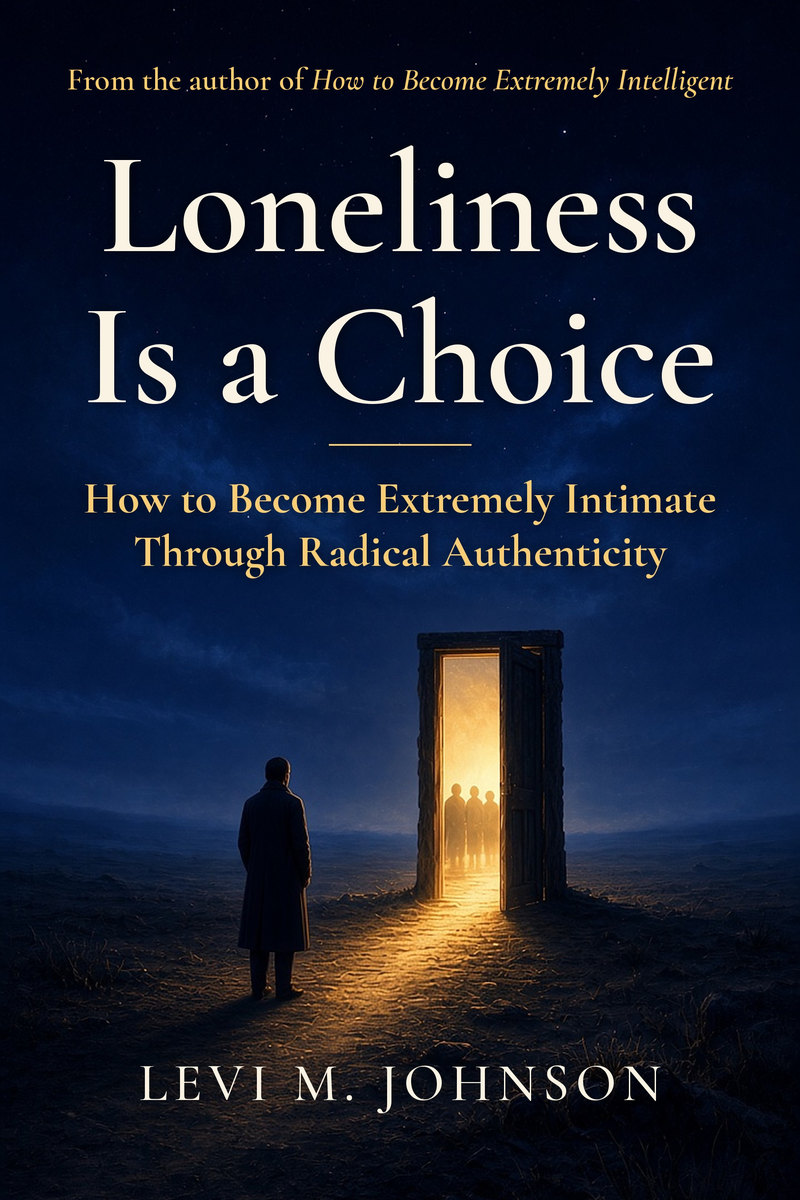
Trade your email for the Introduction and Chapter 1 of the book you choose.
You'll receive the Introduction and Chapter 1 of the book you choose, plus occasional emails from FikaTimeBooks.com. Unsubscribe anytime. We never share your email.
Also on loneliness: How To Stop Hating Yourself: Lead People by Loving Who You Are - 10 Finer Distinctions for Discerning Others · The Admission of Emotions to People · Lessen the Loneliness · More in Loneliness: Granular Insights