Home › Answered Needs › I want to learn everything about everything, but I don't have enough time
I want to learn everything about everything, but I don't have enough time
“i want to learn everything about everything but i dont have enough time”
About two hours later, they posted again:
“today i learned about bacteriophage, biopolymer, hemodialysis and endonuclease. i love looking at pictures on wikipedia”
Thirteen words, all lowercase, no period. The first seven are a whole hunger: “i want to learn everything about everything.” The last six are the arithmetic that seems to answer it: “but i dont have enough time.”
Then, two hours later, a second post. Four new words in one day, and a small, glad confession: “i love looking at pictures on wikipedia.”
The two posts belong together. The first is about everything. The second is about one day. If you have ever closed a tab feeling thrilled and short-changed at once, as if the world were a library and you will only ever see the lobby, this is for you. Two things in that first post usually travel as one. They come apart.
Wanting everything is not the same as owing everything
“i want to learn everything about everything” is an appetite. It is not a syllabus. Nobody handed them a list with everything on it and a due date at the bottom.
Levi M. Johnson knows the appetite. He once wrote on Nostr about the kind of mind he has:
Our minds are endlessly curious about everything.
But an appetite and an assignment can feel alike from the inside, and “i dont have enough time” is the sentence of someone looking at an assignment. Measured against a list called everything, every life is behind schedule, and a day spent on four words looks like a rounding error.
Measured against a hunger, the same day looks different. A hunger is not failed by going unfinished. It is met by being fed. Four words and a stack of pictures on Wikipedia is a meal.
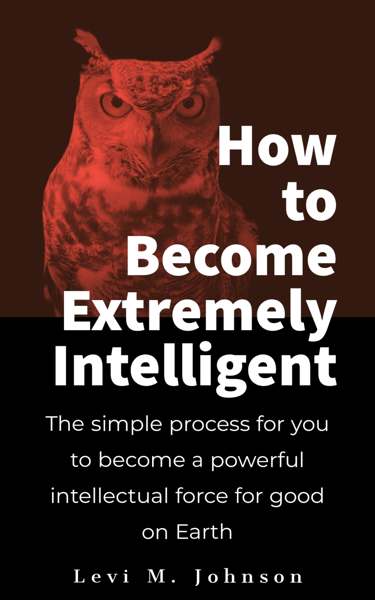
In How to Become Extremely Intelligent, Levi draws the line between the two kinds of learning:
The journey to become even more intelligent is paved not with obligations or "shoulds," but with curiosity.
Obligations and “shoulds” can always be counted, and against them there is never enough time. Curiosity does not count that way. It goes where it is pulled, and that day it pulled hard: bacteriophage, biopolymer, hemodialysis, endonuclease. No list put those four side by side. Curiosity did.
Levi once shared these lines of Einstein’s on Nostr. They hold the same distinction:
Curiosity has its own reason for existence. One cannot help but be in awe when he contemplates the mysteries of eternity, of life, of the marvelous structure of reality. It is enough if one tries merely to comprehend a little of this mystery every day. Never lose a holy curiosity.
“It is enough if one tries merely to comprehend a little of this mystery every day.” Enough is a word that only works for an appetite. Against an assignment called everything, nothing would ever be enough. Against a holy curiosity, a little every day already is.
Knowing everything is not the same as seeing more
There is a second thing folded into “everything about everything.” It pictures learning as collecting, as if the point were to hold all of it, and the sadness is that the shelves will never be full.
What actually happened that day was smaller, and better. Before it, endonuclease was a long word. After it, it was a thing with pictures. The world did not get any bigger. Their eyes did.
Levi describes what new words do to a mind:
Reading and thinking about new, challenging topics enables us to make finer distinctions.
A finer distinction is not one more item on a shelf. It is one more thing the eye can tell apart. In the same book, Levi passes on six words from a friend of his: “Intelligence enables a person to see.”
Seeing does not run out the way a collection does. Nobody finishes seeing, and nobody needs to, because the point of seeing was never to have seen everything. It was to be awake to what is in front of you, and then to a little more of it tomorrow.
Even the book written to help people become extremely intelligent has a heading that sides with the clock: “You Will Never Know All You Need to Know.” There it is about humility, and it lands here too. Not knowing everything is not a failure of time. It is the shape of every mind there has ever been. And a few paragraphs later, the man who wrote that heading says, “I love intelligence, and I love learning.” The limit and the love sit in the same chapter, and neither cancels the other.
Neighboring pages here: How do I become more intelligent?, I coasted on being smart and never learned how to study, and Restless and anxious, like I have a deadline to meet. More on the idea at the heart of this page: Finer distinctions.
Going deeper
How to Become Extremely Intelligent, by Levi M. Johnson, is about curiosity, reading, writing, and the finer distinctions that let a mind see more. It describes what happens when someone stays with one subject long enough:
After reading a set of materials focused on a precise topic for several hours, an understanding emerged in my mind like soap bubbles somebody blew at the bottom of my soul which ascended to my awareness, giving me comprehension and insights into the subject material.
Wanting everything is not the same as owing everything. Knowing everything is not the same as seeing more. Both were already in two posts on one Thursday: one that said there isn’t enough time, and one that spent some of it on bacteriophages and loved the pictures.
If one distinction helped, the book goes further into curiosity, words, and how a mind grows: How to Become Extremely Intelligent · Amazon → · Buy the ebook with Bitcoin (Lightning) → · Browse the books →
This page is part of answered needs at FikaTimeBooks.com — real questions, real answers, no squeeze.
Trade your email for the Introduction and Chapter 1 of the book you choose.
You'll receive the Introduction and Chapter 1 of the book you choose, plus occasional emails from FikaTimeBooks.com. Unsubscribe anytime. We never share your email.
Also on intelligence: How do I become more intelligent? · I coasted on being smart and never learned how to study · Restless and anxious, like I have a deadline to meet · More in Intelligence: Granular Insights