Home › Answered Needs › Doing better in general, and sobbing on the couch tonight
Doing better in general, and sobbing on the couch tonight
But tonight I feel really stupid and don't like me very much and am just sobbing on the couch about it”
Two sentences with a blank line between them. The first is about a season: “doing better in general and thankful for a lot.” The second is about one night: “But tonight I feel really stupid and don't like me very much.”
The word holding them apart is “But.” It sounds as if the second sentence cancels the first. It doesn’t. Both are true at once, and the post knows it, or the first line would never have been written.
Two pairs of things sit close together here. Telling them apart doesn’t stop the tears. It keeps one night from rewriting a whole season.
A hard night is not the same as a lost season
“In general” is a long phrase. It covers weeks, maybe months, of things getting better. “Tonight” covers a few hours on a couch.
A night like this can feel like proof that the better season was never real, that “doing better” was a story and the sobbing is the truth. The post doesn’t say that. It says “I am doing better,” present tense, in the same breath as the tears. The season is still going. The night is happening inside it.
In Reality Is Your Friend, Levi M. Johnson writes about how feelings move:
How you feel right now may or may not be how you were feeling 10 minutes ago, or yesterday, or last month.
Doing better was never a promise that nights like this stop coming. It means they come inside a life that is moving somewhere good. One is weather. The other is climate.
And “thankful for a lot” is still on the page. Gratitude and tears are not competing for the same seat. Someone can be thankful for a lot and still sob on the couch, and neither one makes the other a lie.
Feeling stupid is not the same as being stupid
“Tonight I feel really stupid.” Even in tears, the sentence is precise. It says feel, not am. And it says tonight.
Feeling stupid is a feeling, and feelings are real. They report something. What they report is not always what they seem to say. A feeling of stupidity can be reporting shame, exhaustion, a mistake that stung, an old memory, a comparison. It is rarely an accurate measurement of a mind.
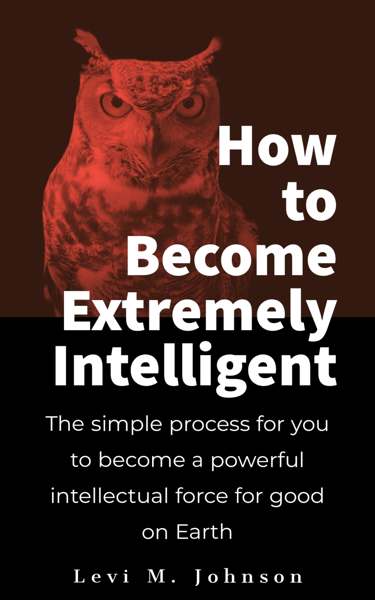
Levi M. Johnson knows that feeling from the inside. In How to Become Extremely Intelligent, he writes about his school years:
From adolescence through young adulthood, I felt like an idiot.
And later, about what he found out:
Somehow in the mix of marriage and returning to university, I figured out that though I might be screwed up, I wasn’t stupid.
The feeling lasted years, and it still wasn’t the truth about him. One night of feeling stupid carries even less authority than that.
The same book explains why a night of sobbing can make a mind feel dull:
When unmanaged, unacknowledged, and invalidated emotions rise which are unattended to with gentleness, compassion, and validation, intelligence and the ability to reason critically are crushed under their weight.
So feeling stupid in the middle of tears is close to what one would expect. When emotion floods, thinking feels crushed. That is the weight of the night pressing on a mind, not the size of the mind.
The same goes for “don't like me very much.” Not liking yourself tonight is a feeling about yourself, not a verdict on yourself. And the phrase is gentle, even now: “very much,” not “at all.” Some liking is still in the room.
Johnson puts the whole distinction in seven words:
Emotions make good indicators but bad dictators.
Tonight’s feeling indicates that something hurts. It doesn’t get to dictate who this person is. And it came out in words, in public, where it could be answered instead of carried alone on a couch. That, too, sounds like someone who is doing better in general.
Neighboring pages here: Constantly yelling at myself in my head, Fine, fine, fine, NOT FINE: when grief comes and goes, and Confident, and still a nervous wreck.
Going deeper
How to Become Extremely Intelligent, by Levi M. Johnson, is about how intelligence is built rather than handed out, opening with an introduction titled starting with a chapter called “Stupid to Intelligent” aboutldquo;Stupid to Intelligentstarting with a chapter called “Stupid to Intelligent” aboutrdquo; about the years he spent believing he was dumb. He writes from both sides of that belief:
I know how it feels to be dumb, and I know how it feels to be intelligent.
A hard night is not the same as a lost season. Feeling stupid is not the same as being stupid. Both distinctions were already inside two sentences from someone who is doing better and had a hard night anyway.
If one distinction helped, the book goes further into how emotions and thinking work together, and how a mind grows: How to Become Extremely Intelligent · Amazon → · Buy the ebook with Bitcoin (Lightning) → · Browse the books →
This page is part of answered needs at FikaTimeBooks.com — real questions, real answers, no squeeze.
Trade your email for the Introduction and Chapter 1 of the book you choose.
You'll receive the Introduction and Chapter 1 of the book you choose, plus occasional emails from FikaTimeBooks.com. Unsubscribe anytime. We never share your email.
Also on intelligence: Constantly yelling at myself in my head · Fine, fine, fine, NOT FINE: when grief comes and goes · Confident, and still a nervous wreck · More in Intelligence: Granular Insights