Home › Answered Needs › I don’t believe in heaven, but my mom did
I don’t believe in heaven, but my mom did
Three sentences, and each one is honest in a different direction.
The first is a conclusion. The second is a wish that the conclusion is wrong. The third is love, said out loud on a birthday she isn’t here for.
Nothing in the post is resolved, and nothing in it needs to be. But two pairs of things in it are easy to hear as one, and telling them apart lets the whole post stand exactly as it is.
Believing is not the same as hoping
“I don’t believe in heaven” is a statement about what the mind has concluded. “I hope I’m wrong” is a statement about what love wants. They are different acts, done by different parts of a person, and they can happen in the same breath without canceling each other out.
Hoping for something you don’t believe in can feel inconsistent, or soft, or a little dishonest. This post shows the opposite. It doesn’t pretend to believe in order to feel better. It doesn’t stop hoping in order to look consistent. It says both, plainly, side by side.
Belief answers one question: what do I think is true? Hope answers another: what would I want to be true, for her? The answer to the first doesn’t get to erase the second.
And the hope isn’t for the person writing. It’s for her: “that’s where her soul is now.” Missing her every day looks back at the years with her. Hoping she is in heaven looks toward what may have become of her. Both are love. Neither has to apologize to the other.
Levi M. Johnson, who does believe in heaven, would read a hope like that differently than a conclusion would. In Reality Is Your Friend he writes, “Eternity is written on the hearts of man.” On that view, a hope that keeps going after the mind has said no isn’t a malfunction. It is something written there. No one has to share that view for the hope to be real. It is real either way. It’s right there in the post.
Not believing is not the same as closing the door
The hinge of the second sentence is the word “wrong.” It takes a particular kind of honesty to say, about your own conclusion, that you would be glad to be wrong.
Not believing and being closed can look alike from a distance. A closed mind says there is nothing there and doesn’t want to hear otherwise. This post says something else: I don’t believe it, and I hope I’m wrong. That is a door left open from the inside, on her birthday, for her.
The believer’s side of that door can sound surprisingly similar. When Johnson sets out his case about the problem of pain in Reality Is Your Friend, he begins with “I could be wrong, but I believe,” and then says this to anyone who doesn’t:
You may believe me, or you may not and that’s okay. I wouldn’t blame you.
A believer who says he could be wrong. Someone who doesn’t believe and hopes to be wrong. They stand on opposite sides of the same question, and they are closer than they look. Neither one is claiming to know more than they know.
And the mom is part of this too: “but my mom did.” Her belief is still in the conversation. Hoping she was right is one way of keeping her voice in the room on her birthday.
What she believed
Since she believed in heaven, it may be worth hearing what that hope holds in its own words. Not as an argument, only as what it is. Johnson quoted it in a note on Nostr, from one of the last pages of the Bible:
He will wipe away every tear from their eyes, and death shall be no more, neither shall there be mourning, nor crying, nor pain anymore, for the former things have passed away.
In that verse, heaven is described less by what is there than by what has ended: mourning, crying, and pain. If that is where her soul is now, that is what it would mean for her.
“I miss you every day”
The post ends where it began, with her. “Happy birthday momma.”
Missing someone every day is not a problem to be solved. It is what love does when the person is gone. Not believing doesn’t make the missing smaller, and hoping doesn’t make it go away. The conclusion, the hope, and the missing all sit together in three sentences, and the post holds every one of them honestly.
Neighboring pages here: It’s the first birthday without him, Fine, fine, fine, NOT FINE: when grief comes and goes, and The valley of tears.
Going deeper
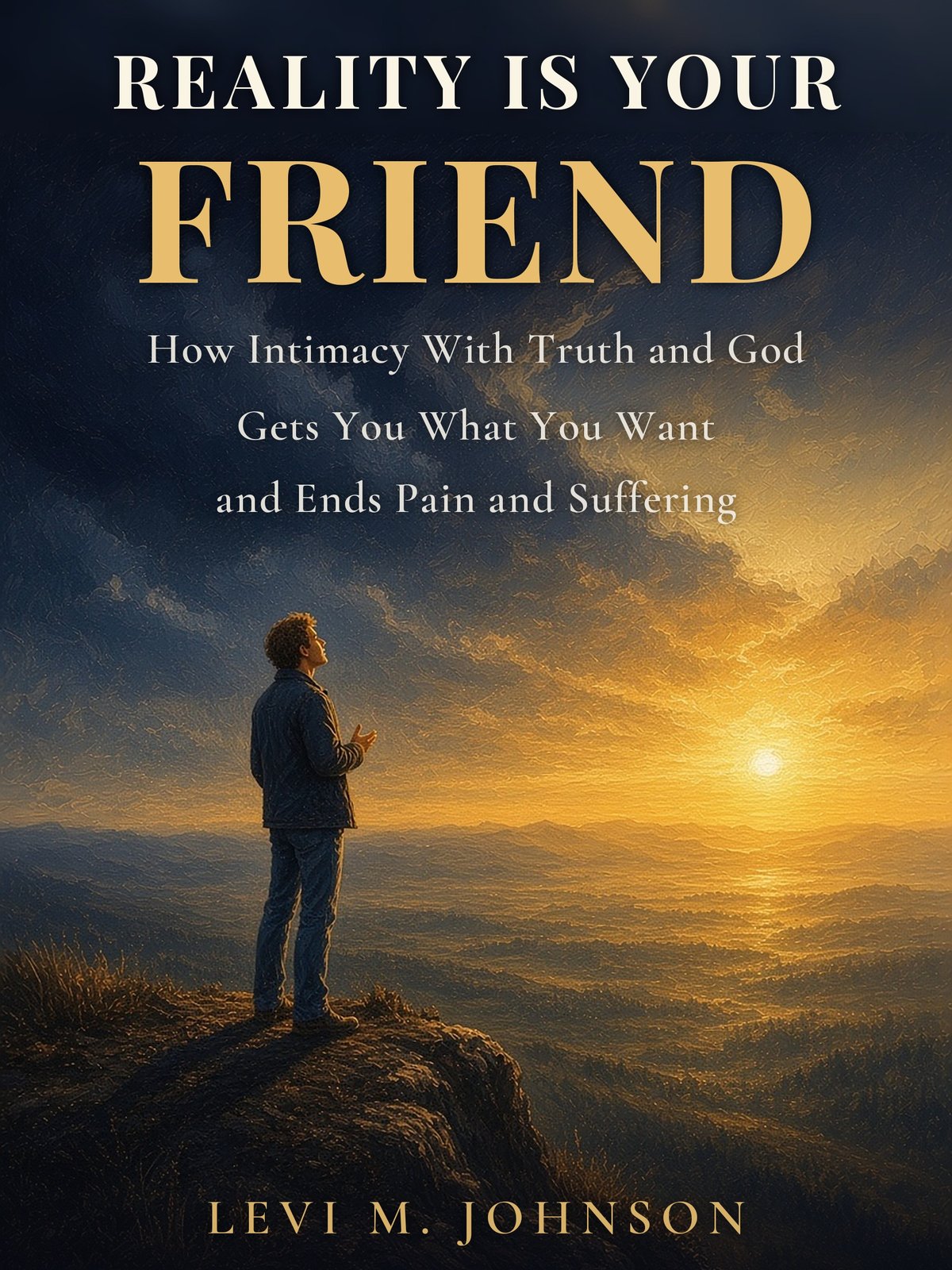
Reality Is Your Friend is the book these lines come from. It takes up the problem of pain head-on, and it is written to people who believe and people who don’t. Johnson describes his own stance near the start:
My approach to reality isn’t cynical, but hopeful. There is real, authentic good in this world despite all the evil, and it behooves you and me to stay focused on it.
Believing is not the same as hoping. Not believing is not the same as closing the door. Both are ways of telling apart what a mind has concluded from what a heart is still reaching for.
If one distinction helped, the book goes further into pain, hope, and what is most real: Reality Is Your Friend · Amazon → · Buy the ebook with Bitcoin (Lightning) → · Browse the books →
This page is part of answered needs at FikaTimeBooks.com — real questions, real answers, no squeeze.
Trade your email for the Introduction and Chapter 1 of the book you choose.
You'll receive the Introduction and Chapter 1 of the book you choose, plus occasional emails from FikaTimeBooks.com. Unsubscribe anytime. We never share your email.
Also on truth: It's the first birthday without him · Fine, fine, fine, NOT FINE: when grief comes and goes · The valley of tears · More in Truth: Granular Insights · More in Grief: Granular Insights