Home › Answered Needs › I feel like a burden for asking my friends for so much help
I feel like a burden for asking my friends for so much help
Two sentences. The first is about the friends: tired, worn down, “fatigued.” The second is about the self: “a burden.”
Between them is a quiet step, from the friends are tired to I am the weight. It happens so fast it feels like one thought.
There is honesty in it, too. “So much help” is said plainly, with no excuse attached. Someone who keeps count of what they have asked for is someone who cares what it costs the people they asked.
If you have ever needed more than you wanted to need, this is for you.
Tired is not the same as tired of you
Fatigue is real. Helping takes time and energy, and sometimes money. Friends who have given a lot may well be tired. The post may be right about that.
But fatigue is a fact about how much was carried. It is not, by itself, a verdict on the one it was carried for. A parent can be exhausted at the end of a day caring for a sick child and not wish for one moment that the child were someone else. A friend can be worn out from helping you move and still be glad it was you they helped.
“Burden” quietly turns the first into the second: they are tired, so I must be too heavy, so I must be the problem. The tiredness may be true. The conclusion does not follow from it.
Levi M. Johnson once put it in a single line on Nostr:
It's more blessed to give than to receive, scripturally and scientifically.
It echoes the words of Jesus that Paul repeats in Acts 20:35. If it is true, then the giving has not only cost your friends something. It has given them something too.
Needing help is not the same as being a burden
A burden is weight with no relationship in it: a load set on someone who did not choose it and gets nothing from carrying it.
Friends who are asked for help stand somewhere else. They can say yes, or no, or not now. Each yes is something they chose to give.
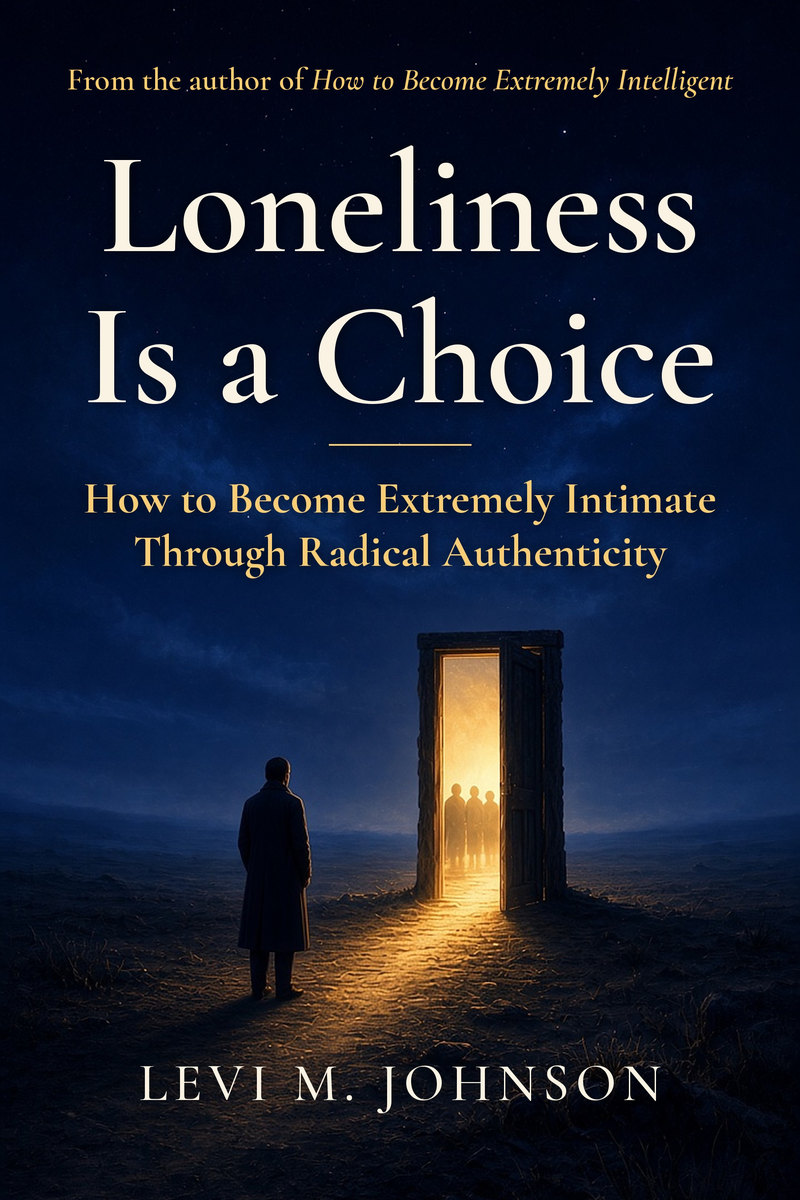
And asking is not the easy half. In Loneliness Is a Choice, Levi M. Johnson writes:
Many good people are willing to give because giving doesn’t require vulnerability.
Asking does. Every time behind “so much help” is a time someone let themselves be seen needing something. That is not the posture of a weight. It is the vulnerable side of closeness, the side many people never let anyone see.
He goes on:
If you can give but can’t take, as people who love you want you to do sometimes, then it hurts those who try to give to you because giving to you in ways that you would like is how they feel close to you and contribute to you.
Being given to is one of the ways the people who love you get close to you. The help you have asked for may be part of what makes these friendships what they are.
Going deeper
In Loneliness Is a Choice, he names what friendships like these are made of:
Deeply authentic relationships are built on vulnerability.
Tired is not the same as tired of you. Needing help is not the same as being a burden. Asking for so much help is the vulnerable half of friendship, and it has been there all along.
If one distinction helped, the book goes further into giving and receiving, loving yourself, and the habits that turn proximity into intimacy: Amazon → · Buy the ebook with Bitcoin (Lightning) → · Browse the books →
This page is part of answered needs at FikaTimeBooks.com — real questions, real answers, no squeeze.
Trade your email for the Introduction and Chapter 1 of the book you choose.
You'll receive the Introduction and Chapter 1 of the book you choose, plus occasional emails from FikaTimeBooks.com. Unsubscribe anytime. We never share your email.
Also on loneliness: Exhausted and have no one to talk to · Being a people pleaser is a form of self-neglect · Surrounded by people that love me, but nobody really knows me · More in Loneliness: Granular Insights