Home › Granular Insights › Loneliness › Interpersonal Relationships: Principles for Success
Interpersonal Relationships: Principles for Success
Table of Contents
- Intro - You CAN Have the Relationships You Want
- Great Relationships are Based in Reality
- Speak Truth to Make Your Interpersonal Relationships Real
- High Quality Relationships are Reciprocal
Introduction
You CAN Have the Relationships You Want
You can have the kind of intimate and joyful interpersonal relationships you want.
Far from confusing, there are certain foundational or first principles which inform all interpersonal relationships, and how people work in those relationships, regardless of which culture or country you may be from. When you understand these first principles and general laws of relationships, then by aligning yourself with them and making decisions based on them, you can dramatically increase the likelihood of cultivating and creating the kinds of intimate and close relationships your emotions need and want.
Interpersonal Relationships Must be Based In Reality to Be Real
Part 1 of 3
If you don't know what people are, and who people are, regardless of race, sex, country, or culture, it's harder to relate to them effectively. When you understand what people are and who people are in terms of fundamental reality, it becomes much easier to relate to them and connect with them because you don't have time to be in interpersonal relationships with everyone.
People are free to choose into or out of relationship with you at any time. This includes your spouse, your coworkers, your friends, society, and strangers. There is never a moment where people are not free to choose connection or disconnection with you. You are free to choose at all time and places, and this goes for all individuals too.
Why is this important to understand?
Because if a person is NOT free to opt out of interpersonal relationships, then by logical extension they are not FREE to opt into those relationships. And if a person is not free to say yes or no to a relationship, then they are not in a real relationship.
Many, many people think they are in a real relationship, which means an interpersonal relationship based on reality, but they are not.
When an interpersonal relationship is not based in reality then it is not real. And if an interpersonal relationship is not real, then it, to greater or lesser degrees, is fake. In fake relationships, many negative emotions come about including loneliness. Therefore for an interpersonal relationship to become real and to stay real it must be based in reality, which is the same thing as saying it must be based in truth (because truth is a synonym for reality).
Let's say you cheat sexually on your spouse but you keep that fact secret. Does your relationship with your spouse have less or more reality in it?
Let's say you're an accountant at a company and instead of keeping the books accurately, you, at the behest of your boss lie about the numbers in the books to maintain the façade that the company is more financially successful than it really is. Does your professional interpersonal relationship with the company and the company's relationship with its stakeholders have more or less reality in it?
The less reality your interpersonal relationships contain, the less real they are. And the less real they are, the more fake and disconnected they feel.
The less real a relationship is, whether between a President and his country, between a husband and wife, between a boss and coworker, between a company and its stakeholders and the public, or students and their teacher, the more toxic or at least disintegrated it probably is.
When less reality is being included in the relationship, when more secrets are being kept, whether factually, emotionally, or intellectually, then it creates more (emotional, spiritual, physical, in short, interpersonal) distance between them. That's not fun.
On the other hand, the more reality you decide to include in your relationships the more you are giving up control of the choices of the other person to opt into or out of the relationship.
Therefore, when you do not include all pertinent information in what you disclose to the other person or people in the relationship, you are taking control of the relationship, which usually means you are following the voice of fear and are seeking toxic self-protection as opposed to healthy self-protection which comes in the form of explicitly articulated boundaries detected intrinsically.
By obeying the voice of fear which says, "Something bad is going to happen if you tell the truth. They will probably reject you and abandon you," then you are implicitly seeking, and in some sense taking control of the other individual because they don't have all the information to make an informed choice about whether to stay in relationship with you, which means you are allowing fear to take control of you.
You may still retain the relationship in appearance, but in reality you have insinuated lies (lies are that which is not real, not reality) into the relationship, which means you have already obtained that which you most feared because acting on fear in relationship immediately introduces spiritually, emotionally and epigenetically that which you feared into the relationship.
Remember, only choices to opt into a relationship made based on reality are real. Therefore, all parties with skin in the game must be made aware of the realities of the other people involved so that their choices can be free, because only choices based in reality are free.
I'm reminded of the story of Adam and Eve and the snake (satan).
The snake lied to Eve saying that she would become wise and would not die if she ate the fruit God had forbidden them to eat. So she chose to eat the fruit based on lies, thereby putting her into bondage. Then Adam followed suit, therefore subjugating himself and all of humanity to bondage because of the lie they took action upon.
They decided to disobey Reality Himself (God), and marry themselves to unreality (separation from God, satan). By their choices and actions, they introduced death to humanity. This means that death is, in some sense, inherent to communication which doesn't include reality. Toxicity, then, is a form of death in a relationship.
How do we fix unrealness and toxicity in our interpersonal relationships?
We bring them into the light by speaking the truth about that which exists about ourselves. These include...
1. thoughts, feelings, emotions, and choices (about everything)
2. Needs and wants
3. Hopes and dreams
4. Identity - in graduating layers, who you are from the most fundamental aspect of your being which never changes and was created by God before your parental conception, to your personal voice (as delineated by Stephen R. Covey in his book The 8th Habit) to the shallower layers of your identity, i.e., group identity, what you do for a living, etc.
5. Values, purpose, vision, and destiny
6. How you enjoy living, loving, learning, and leaving a legacy (the four general human needs)
7. Your story (history & lessons learned)
8. How the people in your life contribute to you through their behaviors and words
9. How you feel and what you think when someone behaves or speaks in a way which detracts from your well-being
10. What you center your life upon (your primary source of security, guidance, wisdom, and power)
What you share with others depends upon the kind of interpersonal relationship you have with them, what kind of relationship you want to have with them, how well they are able to steward your externalization of your internal world, and the degree to which you want to expel toxicity from yourself and/or your personal or professional relationships. As the saying goes...
Speak Truth to Make Your Interpersonal Relationships Real
Part 2 of 3
I remember one time I was friends with a young man and was, at times, mentoring him.
We were talking one time about his friendship with a young woman he liked.
He was vacillating about how to approach his relationship with her, his feeling for her, and whether or not to pursue a romantic relationship with her. He was tying himself in knots about the situation and overcomplicating it to the extent that he was causing himself stress and inducing more and more intense intrapersonal vacillations to his decision making system.
Finally I stopped him and asked, "Would you like to know how to fix this situation?" "Yes" he replied. With my next sentence his entire body and mind and emotions snapped out of the funk he'd gotten himself into.
"Speak truth."
When I said that to him, a large chunk of his state shifted.
He didn't need to strategize or play games or wonder abstractly would he should do. If he wanted a romantic interpersonal relationship with her, or at the very least to know if she felt the same way as him, he needed to introduce his reality to her directly, and then see what happened.
After that encounter, the last I saw of them online they were dating happily.
There is no such thing as getting or compelling or controlling someone into an interpersonal relationship that flushes out feelings of loneliness without it being real. And for it to be real it must be based in reality, and for it to be based in reality the truth must be spoken. When the truth is spoken then the other person or group of people are given a genuine option and explicit emotional opening for joining the relationship AS IT IS.
When I met my now wife online in a singles group and then asked her out, I told her the truth. I revealed the realities of my finances, my unusual career path, who I was, my feelings and preferences and likes and opinions, and as it became more appropriate, my deepest secrets.
I spoke truth about my secrets, whether clean or messy, because I knew that she couldn't in reality choose to join me in a romantic interpersonal relationship if I didn't give her the options and openness to do so at every opportunity.
So, in a certain sense, I disclosed those clean and messy realities of my life in the hopes that they would either drive her away, or attract her. I wanted there to be as little middle ground from me and in our relationship as possible and I wanted to remove toxicity or the potential for it from our connection and from the space between us.
If she was going to choose to date me, to date me exclusively, to become my fiancé, and then to marry me, I knew our connection needed to be based entirely on reality, on explicit and spoken truth, and on the actions which aligned with my words and intentions.
Apparently it worked because her and I are enjoyably married.
Because we continue to practice telling truth to one another in a kind way and are continually seeking to reveal more truth about ourselves to each other, we have a very strong interpersonal relationship since to the extent of our awareness and the limits of time, we know each other's secrets.
Because I speak truth to her and she speaks it to me, it's easier to believe we want the best for one another.
We are able to contribute to one another because we tell each other how the other person's actions contribute or detract to one another's spiritual, emotional, and physical well being. And fear of rejection is kept at bay because we know each other's secrets and dreams, one another's messes and triumphs.
Since our interpersonal relationship is authentic, joy is a regular experience for us. And based on this intrapersonal and interpersonal dynamic, with our eyes on God, we get to invest a lot of our time having fun and going on adventures.
Why have feelings of loneliness been dissipated because of our interpersonal relationship? Because in the act of speaking and acting truth, and by not keeping secrets, there is very little if any emotional separation between us.
Put simply, she sees me and I see her.
Speaking truth brings separate things into the same space so that they can become one. This is the process of integrating two or more people.
My wife and I have built a pool of meaning, a common book of mutual understanding by exchanging truthful words and actions so that we can make choices to be with one another which are real.
If, while we were dating I had tried to deceive her into being with me, because she is an authentic woman she would have sensed my duplicity and rejected me. And the same is true vice versa. So I spoke truth which gave her every opportunity to reject me, which separated me from fear, and actually gave her the best opportunity to accept me.
(The best opportunity to get accepted by someone is on the edge of rejection. It's an all in approach to interpersonal relationships. This isn't an excuse to compulsively overshare because of an insensitivity to appropriate timing. But it is a very good reason to share with appropriately timed vulnerability what it would behoove the other person to know before investing another second of time with you.)
My now wife couldn't truly accept me at the lifelong level of commitment in marriage unless I showed her the real me from flaws to strengths and from failures to triumphs.
Sometimes those interactions were extremely painful and even downright terrifying, but once we admitted then talked through what was most true about ourselves (integration) with one another, joy began to emerge. Connection, intimacy, joy, and trust could not emerge unless we both spoke truth.
This is true in all interactions with people at every scale of humanity from the individuals to nations. First, the individual must speak reality (truth). Only when individuals speak reality can cooperatives form genuinely and cohesively that give rise to marriages, families, neighborhoods, societies, institutions, businesses, and nations.
Speaking Truth in Interpersonal Relationships A Digression on its Economic Benefits
There is a saying that goes, "Fix the money, fix the world."
There is qualitatively more peace in the world when the money is not inflated, and when it's a stable hold of value of people abstracted from space and time. When money represents the same buying power now as it will 100 or 1000 years from now, people can store their earned value in it for long periods of time.
In other words, they can trust it. Put another way, when money speaks truth then people can use it to transfer value over time and space. When money doesn't speak truth, people can't really use it to transfer value over time and space. When people across the world can trust money, it's efficient to make trades in win/win situations which improve the lives of all involved.
When money can't be trusted to hold its value over time and space, for instance because a central bank inflates the money supply, it makes it harder for people to transfer value through time and space, and therefore harder to make trades with people around the world which result in win/win scenarios, and therefore decreases the access of all people to the standard of living they aspire to.
If every person speaks truth, institutions speak truth and then money speaks truth, and then everyone is in a better position to make beneficial choices. Fix the money, fix the world.
How then do we fix money and therefore the world? In essence, by people speaking truth about what's most real. Whether it's the individual or nation state, speaking truth is the fundamental essence of interpersonal relationships which can heal the entire world and unleash unlimited abundance.
High Quality Relationships are Reciprocal
Part 3 of 3
A high quality interpersonal relationship is the appropriate lack of hidden information between two or more people for their level of commitment and plans for the future to work sustainably absent destructive harm that contributes in some sense spiritually, psychically, physically, financially, and meaningfully now and in the future.
You can't control what information other people or organizations tell you or keep from you, but you can demonstrate leadership by making choices about what you will disclose to them. This is the practice and process of vulnerability, a lynchpin of spiritual, emotional, physical, financial, and practical leadership.
(There is no one you're in contact with, personally or publicly, who you're not influencing. Therefore it behooves you, as Jocko Willink might put it, to lead not only the people below you but the people above you as well. Of course, you are the person you cannot not lead.)
Since, "We are only as sick as our secrets," it is a our secrets (deeper vulnerability), or lack thereof, which determine if we get the close interpersonal relationships we genuinely desire. Put another way, the degree to which we practice vulnerability, that is, speaking truth about ourselves explicitly that determines the depth and quality of relationships in our lives.
How do you determine how much truth about yourself to tell other people? Generally speaking, other people teach us how much of our vulnerability they can handle. Healthy, functional people begin by default in a trusting state until they are given a good reason not to. This has two dimensions to it.
Speaking truth and believing other people want the best for you.
A Trusting State
The first dimension of a trusting state is when you speak truth.
You alone have the choice of speaking your implicit truth to others. How open you are, which is the depth of secrets you share with another person (or people), is also up to you.
The general rule is to begin communicating true information about yourself at a relatively shallow but genuine level of vulnerability and then observe how they handle it. Do they steward it well or poorly or somewhere in between?
What you are looking for when you share secrets from shallow to deep is reciprocation.
Why is Reciprocation Important?
Good reciprocation in close interpersonal relationships has certain immutable qualities which, if you observe them carefully, tell you whether the person you are talking with intends good for you AND has the skills to follow through on their intentions.
A person or organization which genuinely intends good for those people who interact with them is good, but if they lack the skills to follow through practically with their intensions in a way which materially adds to the well being of others, it doesn't really matter how well intentioned they are. There is no practical path in communication and action for those good intentions of theirs to make their way into your life in a way which enhances your practical survival and thriving.
If, on the other hand a person or organization has the skills to reciprocate in a positive way to what truth you speak to them, but if they don't genuinely want the best for you it doesn't matter how skilled they are in words and actions, they aren't actually capable of bringing good into your life because they can't or don't want to. Moreover, they are likely to take more from you than they give to you. That is not a good relationship.
Whatever the reason for a person or organization not to bring a reciprocal way of relating to the table, it's not a good idea to stay in those relationships a minute longer than necessary. It's best to completely avoid them altogether because there are better people out there you could be investing your time with who already have the character and competence to give you as much value as you give them. It's a bad idea to stay in relationship with interpersonal parasites.
A person or organization which can reciprocate effectively does so by authentically wanting the best for you while at the same time having cultivated the skills to speak truth (and take action) kindly and courageously when relating to you and other people.
Tip for a Close Relationship:
(The worst ways a person or organization will treat another person is the same way they will treat any person. This is why, for instance, if someone you're on a date with is rude to a waiter, given the right circumstances, they will be rude to you too, especially if they think they can get away with it.)
There are certain characterizes of people who reciprocate well in interpersonal relationships.
1. You seek to understand them, and they seek to understand you.
2. When you tell them your reasonable boundaries, they respond positively by expressing appreciate that you told them, agreeing to respect them, and following through with the appropriate change in behavior.
3. If you message or call them, they message or call you back notwithstanding their other responsibilities.
4. When you initiate some level of interpersonal vulnerability, they respond with a corresponding level of personal vulnerability.
5. They tell you truth, and you tell them truth.
6. They help you win as much as you help them to win.
7. They contribute genuinely to a give and take rhythm in the relationship without ulterior motive or strings attached.
8. They seek balance in the relationship, so they don't perpetually give to you nor do they perpetually take from you.
9. Just as you express your appreciation for them, they express their genuine appreciation for you.
10. They take responsibility for their life and their problems, and do not seek to make their problems your problems. At the same time, they don't hide them from you either.
11. They ask for help explicitly and directly, and if you say no, do not punish you for it.
12. When it works for them, they help you if you ask for help.
13. They encourage you in your pursuits as you do the same for them.
14. Since you celebrate their victories, no matter how small or large, they do the same for you.
15. To the extent appropriate, they allow themselves to feel your pain just as you practice doing with them.
16. On the low end, they keep the ratio of positive to negative messages about 7 to 1, that is 1 negative interaction such as a kind and direct confrontation only after about 7 positive interactions.
17. On the high end, they do not exceed 11 positive interactions for every 1 negative interaction.
Research suggests that having too few positive experiences (6 to 1 or less are probably too few), and too many positive interactions for every negative interaction (11 or more positive interactions for every 1 interaction is too many) erodes the quality of the interpersonal connection.
Whether a friendship, a marriage, a professional relationship or some other relationship, these are some of the markers of people who are excellent at reciprocating. Coupled with the character to match these skills, a person or people sensitive in their areas is likely someone who can steward relationships well and depending on how you guys click is a strong indicator of future success.
Summary
Base Relationships in Reality, Speak Truth, Reciprocate
Whether it's in your personal, public, or professional life, these are some of the principles which will materially aid you in obtaining the kinds of high quality relationships you need and want. From recognizing the need of people to know the truth about you to be able to genuinely select you or reject you, to disclosing secrets which keep you and others separated emotionally and practically, to speaking truth as a way to dispel confusion and make progress, and seeking people willing and capable of reciprocal interpersonal relationships while rejecting those who do not practice reciprocation, a relationship will not work in the long term without a substantial and conscientious integration of these principles and habits.
To the degree you and others use these fundamental interpersonal axioms in your relationships, you will experience a commensurate increase in the quality of the connection, and the trust, function, healthiness, and even enjoyment it contains. Because they work, using these good ideas will help you get the good relationships you've always wanted. Use them, and your life will not stop improving.
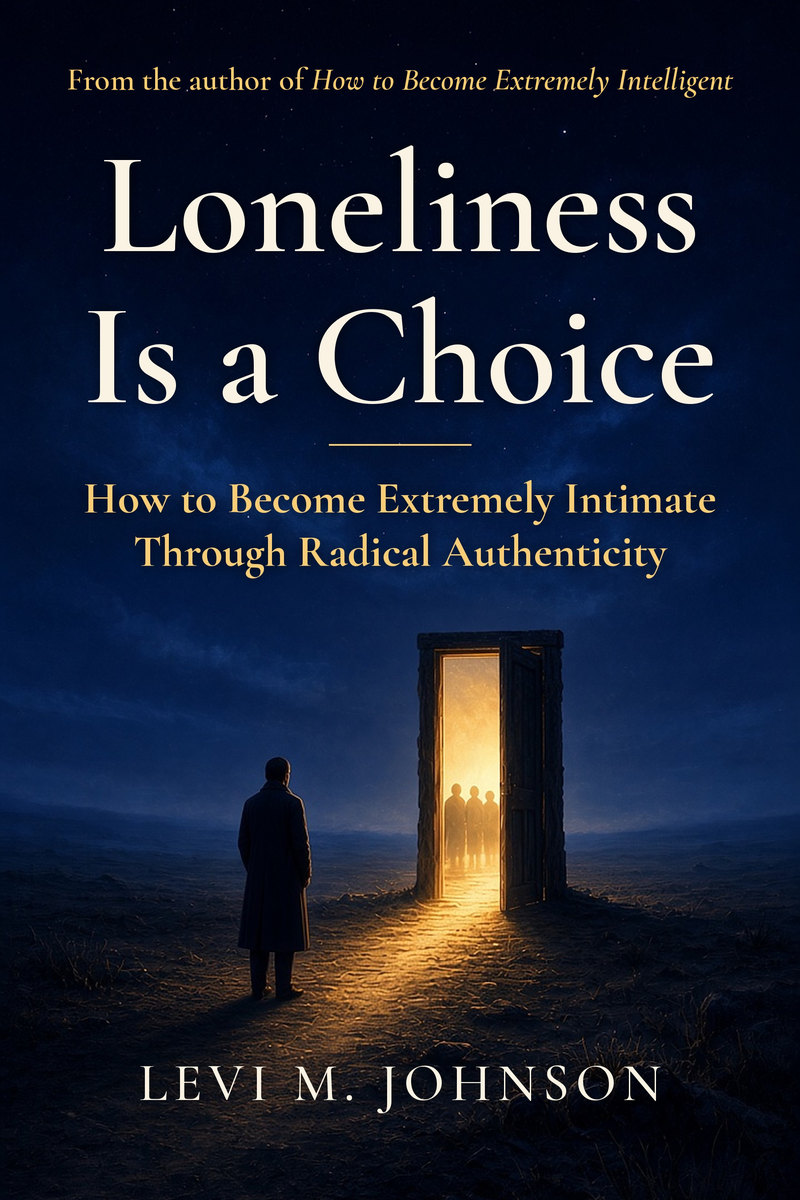
Trade your email for the Introduction and Chapter 1 of the book you choose.
You'll receive the Introduction and Chapter 1 of the book you choose, plus occasional emails from FikaTimeBooks.com. Unsubscribe anytime. We never share your email.
Also on loneliness: How To Stop Hating Yourself: Lead People by Loving Who You Are - 10 Finer Distinctions for Discerning Others · How to Trust People You Can’t Trust · Wanting to be heard, yet afraid to speak up · More in Loneliness: Granular Insights