Home › Answered Needs › Living for principles, living for happiness: where’s the peace?
Living for principles, living for happiness: where’s the peace?
Two sentences. The first is a thought that has been turning over “lately.” The second is a question.
The question doesn’t ask which one to pick. It asks “Where's the peace?” That is a different question, and an honest one. It belongs to someone who cares about both things and doesn’t want to give either of them up.
Two pairs of things in the post are easy to hear as one.
Not meeting today is not the same as never meeting
The post is careful. It doesn’t say principles and happiness never meet. It says “a lot of times those ideas don't intersect.”
That is true, and it is worth saying plainly. Keeping a principle often costs something, and the cost usually arrives first. The honest answer, the kept promise, the thing declined because it isn’t right: each of these can make a day worse, not better. Nothing on this page needs to pretend otherwise.
But a place where two roads don’t cross today is not proof that they never cross. Often what keeps them apart is time. In Reality Is Your Friend, Levi M. Johnson writes about the laws of reality that run underneath everything, and about why they can seem absent:
Those laws cannot cease to exist though the time that passes between cause and effect can make it seem as if they don’t exist.
The cost of living by a principle is usually paid now. What it builds tends to show up later, in trust, in a clean conscience, in a life that holds together. On any one afternoon, the two can look like strangers.
The same book makes a claim that sounds almost opposite to the post, and it includes the cost inside the sentence:
Abiding by and embracing reality, despite life’s setbacks, is the best path to finding joy and happiness.
The setbacks are part of that picture, not left out of it. And part of why the two seem so far apart is that they are measured on different clocks. A principle is meant to stay the same. Happiness, felt as a feeling, is not:
What is subjective about your feelings is that they change, and they do not stay the same. Simultaneously it is objectively true that your feelings exist, and are valid.
So the comparison is uneven from the start: something meant to last, set beside something that changes by the hour. A principle can be kept on a day it doesn’t feel good at all. That day’s feeling is real and valid. It is not the final word on whether the two ever meet.
Happiness is not the same as peace
The first sentence is about principles and happiness. The last one asks for something else. It doesn’t ask where the happiness is. It asks “Where's the peace?”
Happiness can come and go in an afternoon. Peace is closer to being in one piece. When a person lives for principles at the expense of happiness, or for happiness at the expense of principles, either way something is left behind. The ache in the question sounds like the ache of being split in two.
Johnson’s word for the opposite of that split is “integrated”:
The deeper, broader, and higher your understanding of reality, God, yourself, and your context, the more integrated and peaceful you become because you have accepted what you cannot change, and you are aware of how to interact in order to win while leaving people better than you found them.
And earlier in the book, about loving what is real:
Those who love it find rest for their inner world because it helps a person become integrated instead of remaining disintegrated.
In that picture, peace is not a prize handed to whichever side wins. It is what it feels like when the sides stop being sides.
Johnson has also written about happiness in a way that puts it on the same side as principle rather than across from it. In a note on Nostr, he put it in one line:
Happiness is, "I am responsible."
Happiness in that sense is not the same thing as a good mood. It is closer to owning one’s life. That kind of happiness and a life built on principles are not strangers.
“Where's the peace?”
The post doesn’t answer its own question, and it doesn’t need to. Thinking about this “lately” means it matters. Wanting both, and refusing to pretend they always line up, is already a kind of honesty.
Neighboring questions answered here: Setting boundaries comes with risk, and grief, There is no such thing as ‘My Truth’?, and Always in someone’s shadow, not allowed to enjoy.
Going deeper
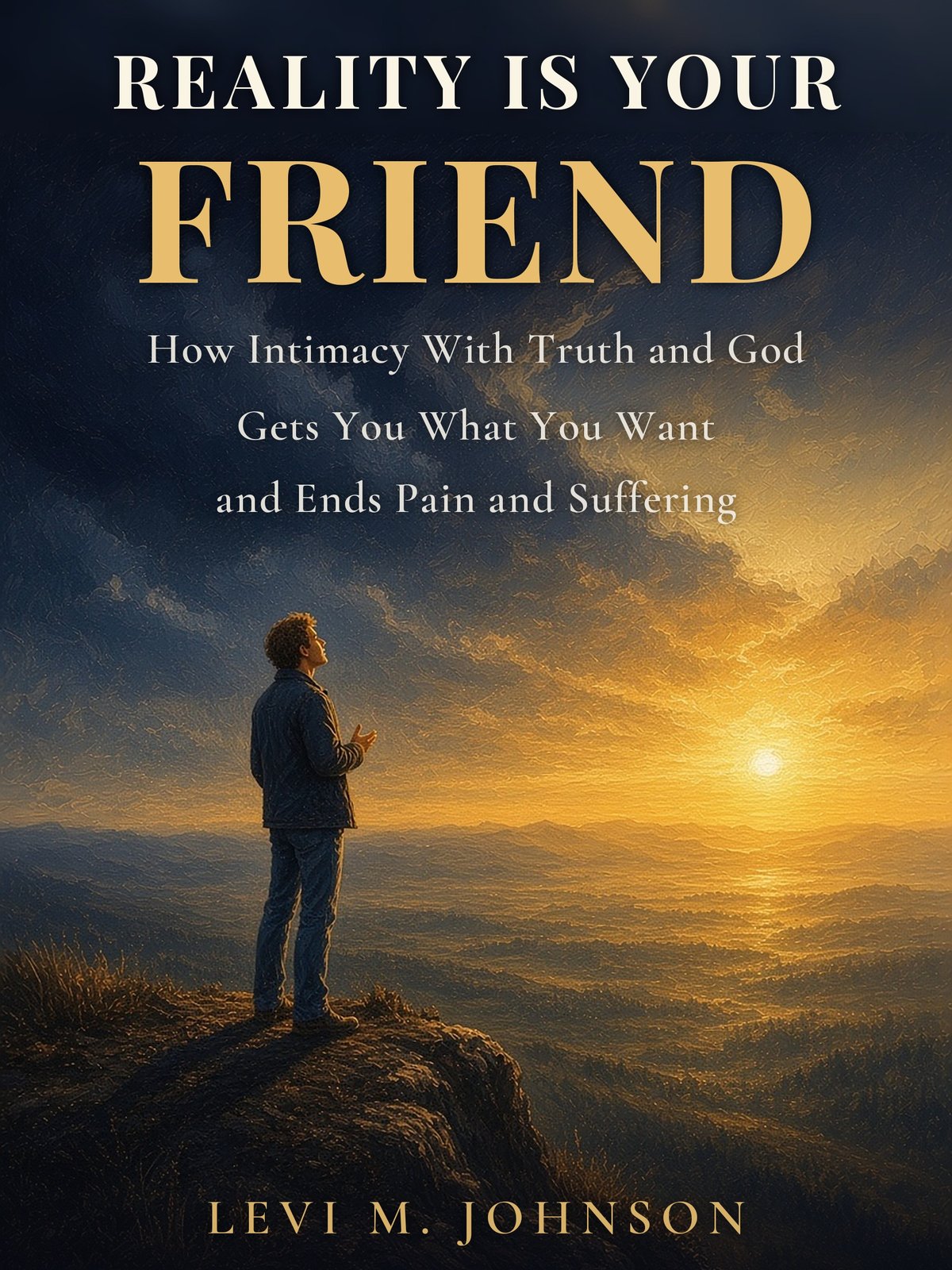
Reality Is Your Friend is the book these lines come from. It treats principles as the laws of reality, and peace as what grows when a person stops fighting them. Johnson names what he believes reality gives back:
Those who embrace reality will be given great gifts. The gifts of peace, rest, hope, love, riches, friends, and fulfilled dreams.
Not meeting today is not the same as never meeting. Happiness is not the same as peace. Both are ways of telling apart what a moment feels like from what a life is building.
If one distinction helped, the book goes further into how living with reality and living well become the same road: Reality Is Your Friend · Amazon → · Buy the ebook with Bitcoin (Lightning) → · Browse the books →
This page is part of answered needs at FikaTimeBooks.com — real questions, real answers, no squeeze.
Trade your email for the Introduction and Chapter 1 of the book you choose.
You'll receive the Introduction and Chapter 1 of the book you choose, plus occasional emails from FikaTimeBooks.com. Unsubscribe anytime. We never share your email.
Also on truth: Setting boundaries comes with risk, and grief · There is no such thing as ‘My Truth’? · Always in someone's shadow, not allowed to enjoy · More in Truth: Granular Insights