Home › Answered Needs › The real world is depressing and I'm sad
The real world is depressing and I'm sad
Age 20: I want to learn -everything- about the real world.
Age 30: The real world is depressing and I'm sad.
Age 40: I love the world of imagination and creative play!”
Four lines, four decades, and the first line and the last are word for word the same.
It reads like a joke, and it lands like one. A lot of people recognized themselves in it. But the line in the middle isn’t a joke: “The real world is depressing and I'm sad.” Somewhere between twenty and thirty, wanting to learn everything turned into sadness.
Two pairs of things sit very close together in those four lines. Telling them apart doesn’t change the story. It lets each line say exactly what it says, and no more.
“The real world is depressing” is not the same as “I'm sad”
The age-thirty line is two sentences joined by “and.”
The second one is a report: I’m sad. Nobody else can check it, and nobody needs to. It is simply true.
The first one is a verdict. It says something about the world itself, all of it, and it was reached by someone who set out at twenty to learn everything. That is what gives the sadness its weight. It doesn’t feel like a mood. It feels like the result of the research.
But a feeling about what you have learned is not the same as a finding about what the world is. The sadness is real evidence of something: of how much the twenty-year-old cared, and of what actually reached them in those ten years. Whether it is evidence about the whole real world is a separate question, and the line folds the two into one.
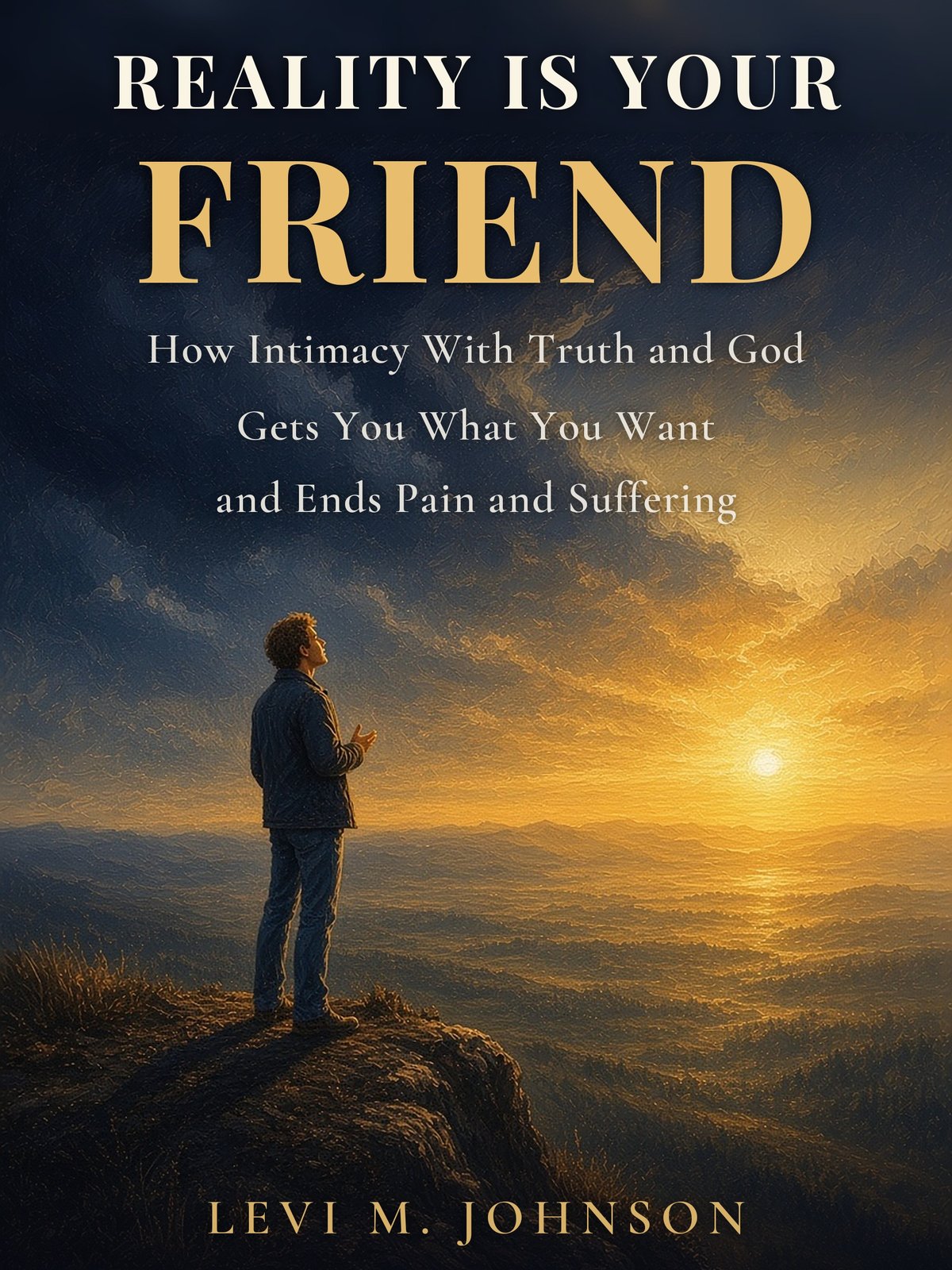
In Reality Is Your Friend, Levi M. Johnson points at how a picture of the world gets put together:
The individual can select what to perceive, but most people don’t consciously make that selection. Most people allow themselves to have their perceptions selected for them.
“I want to learn -everything-” is a wide-open door, and a wide-open door doesn’t choose what comes in. If much of what came through it was what has gone wrong, ten years of that can add up to a verdict that sounds like a conclusion about reality and is partly a record of what was selected.
None of that makes the sadness wrong. It only means the sadness and the verdict don’t have to stand or fall together. A person can be honestly sad about what they learned, and the real world can still hold more than what reached them between twenty and thirty.
Coming back is not the same as going back
The last line repeats the first, exclamation point and all. On the page it looks like a circle: forty ends up exactly where ten began.
But the ten-year-old loved imagination before knowing much about the real world. The forty-year-old loves it after: after the learning, and after the sadness. Same sentence, different person saying it.
One reply under the post put the tension plainly:
That’s true.
Unfortunately the statement for 40 doesn’t negate the 30.
It doesn’t. And it doesn’t have to. Going back would mean undoing thirty: unlearning what was learned, closing the door on the real world, playing as if none of it happened. Coming back means carrying thirty into forty. Imagination at forty knows what the world contains, and plays anyway.
That is a different thing from escape. Johnson doesn’t treat imagination as the opposite of reality. He opens his chapter on reality and imagination with one of his favorite songs, from Willy Wonka & the Chocolate Factory, and then writes:
These lyrics speak to the power of imagination as it relates to reality. Nothing exists that wasn’t first imagined.
A little further on:
Imagination seems to be the most powerful of the tools we use to create the realities we live in.
On that reading, the four lines don’t describe someone who gave up on the real world. They describe someone who went looking for it, was hurt by part of what they found, and came back to the one tool that adds something new to it. The ten-year-old played. The forty-year-old plays knowing what play is up against, which is a sturdier kind of love.
The twenty-year-old wasn’t wrong
It would be easy to read the arc as a lesson: wanting to learn everything was naive, and the sadness at thirty was the price.
The second line doesn’t deserve that. “I want to learn -everything- about the real world.” That is hunger, with marks around the word that mattered most. The hunger didn’t fail. Some of what it found was heavy, and heavy is not the same as all.
Johnson once shared these words from Einstein on Nostr:
The important thing is not to stop questioning. Curiosity has its own reason for existence. One cannot help but be in awe when he contemplates the mysteries of eternity, of life, of the marvelous structure of reality. It is enough if one tries merely to comprehend a little of this mystery every day. Never lose a holy curiosity.
Einstein’s “the marvelous structure of reality” is the same real world the post found depressing at thirty. Both can be true in one life: sad about what you learned, and still in awe of what there is to learn. The love at forty doesn’t have to cancel the sadness at thirty, and the sadness at thirty doesn’t get to cancel the hunger at twenty. All four lines are allowed to stay.
Neighboring pages here: I’ve stopped caring about a lot of things in my 30s, There is no such thing as ‘My Truth’?, and How do I become more intelligent?
Going deeper
Reality Is Your Friend is the book these lines come from. Its seventh chapter, “reality & imagination,” is about the two worlds in this post, and how they are connected rather than opposed. Johnson describes his own stance toward the real world near its start:
My approach to reality isn’t cynical, but hopeful. There is real, authentic good in this world despite all the evil, and it behooves you and me to stay focused on it.
“The real world is depressing” is not the same as “I'm sad.” Coming back to imagination is not the same as going back. Both are ways of keeping everything the four lines learned.
If one distinction helped, the book goes further into reality, imagination, and what is most real: Reality Is Your Friend · Amazon → · Buy the ebook with Bitcoin (Lightning) → · Browse the books →
This page is part of answered needs at FikaTimeBooks.com — real questions, real answers, no squeeze.
Trade your email for the Introduction and Chapter 1 of the book you choose.
You'll receive the Introduction and Chapter 1 of the book you choose, plus occasional emails from FikaTimeBooks.com. Unsubscribe anytime. We never share your email.
Also on truth: I've stopped caring about a lot of things in my 30s · There is no such thing as ‘My Truth’? · How do I become more intelligent? · More in Truth: Granular Insights