Home › Answered Needs › Some days everything feels hopeless, and like I deserve the loneliness
Some days everything feels hopeless, and like I deserve the loneliness
Feels like everything is on the verge of collapsing around me.
Like the optimism and hope I try and cling to are just an illusion, a lie I tell myself to try and get by.
That I deserve the loneliness and isolation. They're my own fault in the first place.”
Four lines, and almost every one leans on the same word. “Some days everything just feels hopeless.” “Feels like everything is on the verge of collapsing around me.” “Like the optimism and hope I try and cling to are just an illusion.”
The last line sounds different. It sounds like a verdict: “That I deserve the loneliness and isolation. They're my own fault in the first place.”
But read it again and it is still hanging from that first word. Feels like everything is collapsing. Like the hope is a lie. That I deserve the loneliness. The verdict arrived inside the feeling, on one of the days the post calls “some days.”
Two pairs of things are folded together in those lines. They are easy to take as one, especially on a day like that one.
My own fault is not the same as deserving it
“They're my own fault in the first place.” Maybe some of it is. Nobody outside can weigh that, and the post doesn’t ask anyone to.
But fault and deserving answer two different questions. Fault asks how something came to be. Deserving asks whether it should stay. The first looks back at a cause. The second hands down a sentence, and a sentence is meant to be served.
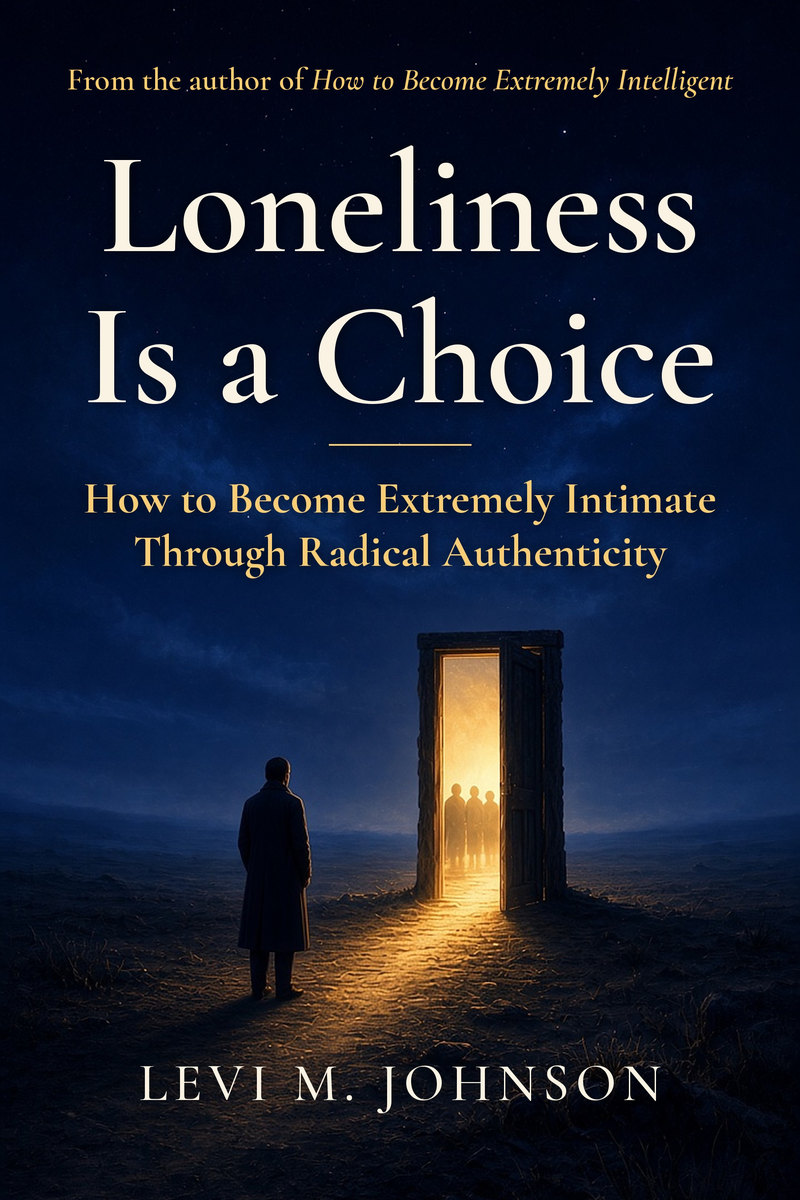
Levi M. Johnson wrote a whole book with a title that, on a hopeless day, could sound like it agrees with that last line: Loneliness Is a Choice. Its introduction opens with a sentence that goes the other way:
If loneliness is a choice, so is intimacy.
The same thing that makes loneliness partly someone’s own is what keeps it from being a sentence. A sentence is passed once and then carried out. A choice can be made again.
“Deserve” is also a particular kind of word. It doesn’t only describe the loneliness. It argues for it. In the same book, Levi writes about where that kind of word tends to come from:
Shame tries to tell you a series of lies to convince you that you don’t deserve to be loved, and also tries to get you to reject the love that is offered to you.
“I deserve the loneliness” is the same lie seen from the other side. It explains the isolation and keeps it in place, both at once.
Hope you cling to is not the same as hope with a reason
“The optimism and hope I try and cling to.” Cling is a tiring word. It means holding something up by grip alone, with nothing underneath it. If that is what hope is, then on a hard day it does look like an illusion, a lie told “to try and get by.”
There is another kind of hope. It rests on something that is actually true, so it doesn’t need to be gripped.
Levi knows the first kind from the inside. In Reality Is Your Friend, he writes about the time he was fired from a university teaching job in China:
I was hopeless and couldn’t see my way forward. That’s when I finally became willing to ask for the help I needed to sort myself out, to ignore the pleadings of shame to stay isolated, and to start sharing my struggles with someone, someone who was willing and able to listen, someone who was safe.
“The pleadings of shame to stay isolated.” Shame argued for the isolation then, the way “I deserve the loneliness” argues for it now. What turned that hopelessness was not a better story to tell himself. It was someone real, listening.
Years later, he gave his reason for hope in Loneliness Is a Choice, and it isn’t optimism:
The reason I have hope for you in part is because, even if you’re as depraved and toxic as I used to be, if you’re willing to learn, then you can learn how to have very healthy and functional interpersonal relationships.
That hope doesn’t need the past to be clean. He describes his own past in harder words than “my own fault.” The hope is not that none of it was anyone’s doing. The hope is that the past doesn’t get the last word.
And the post carries its own limit in its first two words. Some days. Not every day. On those days, the feeling speaks in verdicts: hopeless, collapsing, a lie, deserved. The feeling is real. The verdicts are a separate thing.
Neighboring pages here: I feel rejected even though no one's rejected me, Constantly yelling at myself in my head, and Doing better in general, and sobbing on the couch tonight.
Going deeper
Loneliness Is a Choice, by Levi M. Johnson, is about walking out of loneliness and into closeness with God, with yourself, and with people who want the best for you. Its title can sound like blame. Inside, it answers the word “deserve” directly:
Since you are a child of God who was created by God, you deserve to be loved.
My own fault is not the same as deserving it. Hope you cling to is not the same as hope with a reason. Both were already inside four lines written on a hopeless day.
If one distinction helped, the book goes further into shame, being known, and closeness that is real: Loneliness Is a Choice · Amazon → · Buy the ebook with Bitcoin (Lightning) → · Browse the books →
This page is part of answered needs at FikaTimeBooks.com — real questions, real answers, no squeeze.
Trade your email for the Introduction and Chapter 1 of the book you choose.
You'll receive the Introduction and Chapter 1 of the book you choose, plus occasional emails from FikaTimeBooks.com. Unsubscribe anytime. We never share your email.
Also on loneliness: I feel rejected even though no one's rejected me · Constantly yelling at myself in my head · Doing better in general, and sobbing on the couch tonight · More in Loneliness: Granular Insights