Home › Answered Needs › I try to do as much good as I possibly can. Why can't karma actually exist?
I try to do as much good as I possibly can. Why can't karma actually exist?
Five sentences. The first four end in a question mark. The last one doesn’t.
The first question opens with a statement, and it is the ground everything else stands on: “I try to do as much good as I possibly can.” Not some good. As much as possible.
Then the questions climb. Why is everything still so bad. Why can’t karma exist. Why do the worst people have so much. Why can’t I just be happy. And then the last line, which isn’t a question at all: “That's all I want.”
Nothing here is going to argue with what the post sees. Good people do have hard lives. Cruel people do get rich. In Reality Is Your Friend, Levi M. Johnson doesn’t pretend otherwise. He writes plainly of “the pain you have inevitably experienced, and how unfair life is.”
But two pairs of things are folded together inside those questions, and they are easy to hear as one.
Being paid back is not the same as reaping
Karma, the way the post asks for it, is a kind of ledger. Good that someone does comes back to them in a form anyone can see: ease, comfort, enough money. Harm comes back the same way. By that ledger, “the worst people on Earth” having “more money than they could ever need” is proof that nobody is keeping the books.
Levi’s book does say that what people do comes back to them. But it describes a different ledger:
Jesus said that God will not be mocked, and that whatever a man sows that will he also reap. This is illustrated by a brief interaction with Booker T. Washington. Someone implored Booker T. Washington to respond to his detractors, but he replied that when people attacked him that it was they who got weaker. A person can violate reality, but in doing so they are actually violating themselves.
Booker T. Washington’s attackers didn’t lose money for attacking him. They got weaker. The harvest in that passage isn’t paid into anyone’s bank account. It is paid into the person. “Violating themselves.”
That is why a bank balance can’t settle the question. Money measures what someone has. It says nothing about what they are becoming. A person can have more than they could ever need and still be shrinking, year after year, in ways nobody photographs.
It works the other way too. “Why can't karma actually exist?” can carry a quiet conclusion inside it: the payout never came, so maybe the good never counted. Those are two separate things. The payment can be missing while the good still did exactly what good does, to the people it reached and to the one who kept choosing it.
None of that makes the misery smaller or the unfairness less real. It only means the scoreboard the post is reading is not the one where the good gets counted.
More money than they need is not the same as taken care of
The post makes a comparison. The worst people have “more money than they could ever need.” But when the post names what it wants, money isn’t on the list: “Why can't I just be happy and taken care of?”
Not rich. Not more than enough. Happy, and taken care of.
Those are different things. Money is something a person has. Being taken care of is something another person does: noticing, providing, staying. Enough money is part of being looked after, and nobody who has gone without it thinks otherwise. But no amount of it can make someone care. The worst people on Earth may have the first in abundance, and no one can see from the outside whether they have the second.
“That's all I want” is said almost like an apology, as if the want were too small to matter or too big to ask for. It is neither. Writing about the bids people make for attention, Levi names what sits underneath them in Loneliness Is a Choice:
…fundamentally it is to get your need for attention and connection met, and that need of yours for attention and connection, is valid and good.
Wanting to be happy and taken care of isn’t greed, and it isn’t weakness. It’s one of the needs a person is made with. The post states it plainly, in the last line, after all the questions.
Neighboring pages here: Living for principles, living for happiness: where’s the peace?, It’s naive to think generosity gets you loyalty, and It feels like I missed the boat to a good life.
Going deeper
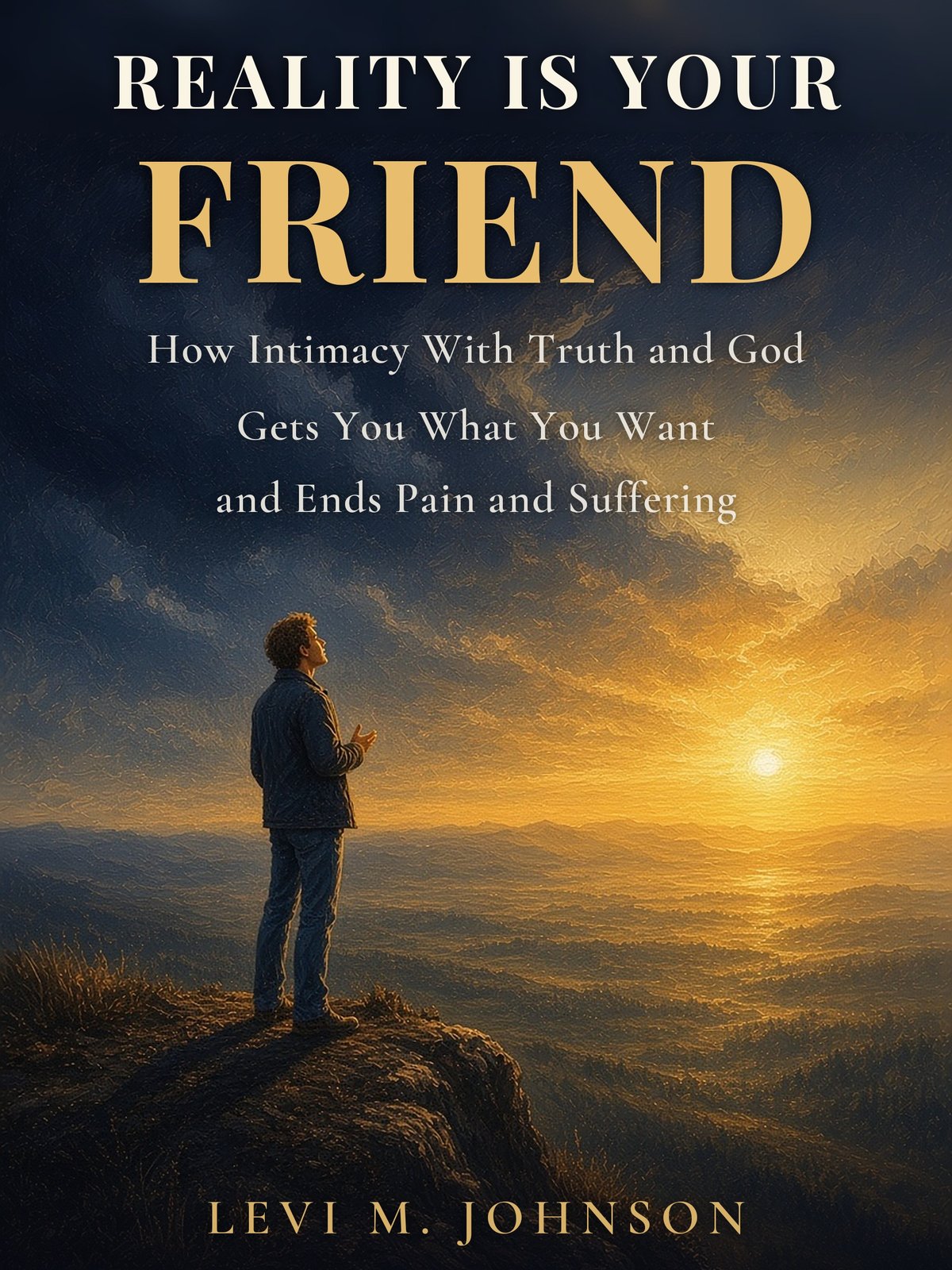
Reality Is Your Friend, by Levi M. Johnson, is about reality as a friend, including the parts of it that hurt and the parts that look unfair. On the last of the post’s questions, about being happy, it says this:
Abiding by and embracing reality, despite life’s setbacks, is the best path to finding joy and happiness.
Being paid back is not the same as reaping. Having more money than you need is not the same as being taken care of. Both distinctions were already there, in five sentences written by someone doing as much good as they possibly can.
If one distinction helped, the book goes further into suffering, unfairness, and what reality gives back: Reality Is Your Friend · Amazon → · Buy the ebook with Bitcoin (Lightning) → · Browse the books →
This page is part of answered needs at FikaTimeBooks.com — real questions, real answers, no squeeze.
Trade your email for the Introduction and Chapter 1 of the book you choose.
You'll receive the Introduction and Chapter 1 of the book you choose, plus occasional emails from FikaTimeBooks.com. Unsubscribe anytime. We never share your email.
Also on truth: Living for principles, living for happiness: where’s the peace? · It’s naive to think generosity gets you loyalty · It feels like I missed the boat to a good life · More in Truth: Granular Insights