Home › Answered Needs › If I don’t like the Booker Prize winner, does that make me stupid?
If I don’t like the Booker Prize winner, does that make me stupid?
Half an hour later, under it: “I think sometimes a lot of stuff around "difficult" art is less an appreciation of the art itself and more about sticking it to a real or imagined set of ignorant/philistine people who don't appreciate it, cause they're stupid and I'm better than them. *I do this, it motivates me, I totally get it*”
One long sentence, with no full stop until almost the very end. It runs from a book to a feeling, to a word with a capital letter, “Stupid,” to shame, and then to a quiet and very human solution: putting the book down, “so that there's still the possibility I would like it.”
Then a dry little line to close: “engaging with culture is funny.” It is, a little. A novel written to be enjoyed is lying half-read like an exam nobody wants handed back.
Then she came back to her own post and added something harder, about herself, and said it anyway.
If you searched for whether not liking a prize-winning book means you’re not smart enough for it, this page is for you. Two pairs of things sit very close together in those posts. From the inside they feel like one thing. They aren’t.
Not liking a book is not the same as not understanding it
Look at what the post actually reports: “I don't think I'm really into it.” That is a sentence about liking. Nothing in it says the book was too hard to follow, or that its meaning slipped away. The fear arrives one clause later, uninvited: “if I don't like it that makes me Stupid.”
Understanding and liking are two different meetings with a book. Understanding is whether you can follow what it’s doing. Liking is whether what it’s doing reaches you. A person can see exactly what a novel is attempting and still not be into it. A person can love a book they only half understand. A prize can say a book is good. It can’t say who it will reach.
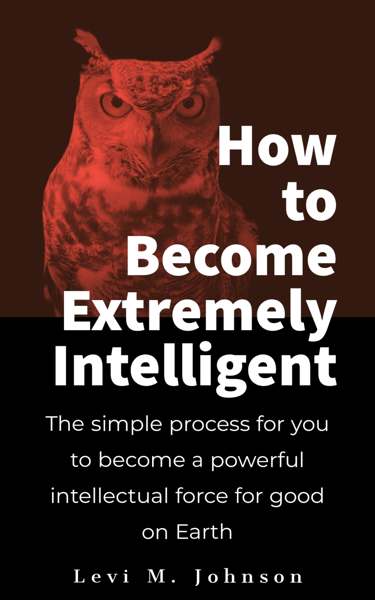
Levi M. Johnson opens How to Become Extremely Intelligent with a line from Robert Kiyosaki: “Intelligence is the ability to make finer distinctions.” Not being into a book is itself a distinction. It is a mind noticing something about a book, not a book exposing something about a mind.
Later in the same book, Levi sets two reading experiences side by side:
Reading Bleak House by Charles Dickens was a challenge. I had to remember many characters, many places, and many events. It became mentally tiring, so I bought a current work of fiction and started reading. Before Charles Dickens, I may have enjoyed it. After reading Charles Dickens, the new novel seemed tepid and thin, like Michael Phelps replicating his butterfly stroke through thin air; it didn't force me to think. I returned the tepid fiction and ran happily into the genius literary arms of Charles Dickens.
A great book wore him out. A new one he might once have enjoyed now seemed thin to him, and he took it back. “Before Charles Dickens, I may have enjoyed it.” Liking, in that paragraph, isn’t a score. It depends on what a person has already read, what they’re hungry for, what the book is reaching for and whether it lands. Neither the tiredness nor the thinness was a verdict on whether he was smart. Both were things his mind noticed, and he named the second one precisely: “it didn't force me to think.”
“I don't think I'm really into it” is the same kind of noticing. It is information about how one person met one book this month. It is not information about how much mind she has.
Liking a book is not the same as being ranked by it
Then the second post, and its honesty is rare. She writes that a lot of the talk around “difficult” art is less about the art itself and more about feeling above an imagined crowd who don’t get it. Then she puts herself inside her own sentence: “*I do this, it motivates me, I totally get it*”
Read the two posts together and they describe one machine running in two directions. If loving difficult art lifts a person above the ones who don’t, then not loving it drops that person below. The capital S in “Stupid” didn’t come from the book. It came from the ranking. The book only asked to be read.
That is why the shame makes sense, and why it is aimed at the wrong thing. Shame is about how we stand in other people’s eyes. Levi remembers where his own began:
I remember being in Sunday school at 5 or 6 years old and not being able to read like the other kids and the shame I felt at being different.
Not able to read like the other kids. The shame was never about the reading alone. It was about being seen as different, and about the ranking that seemed to come with it. That boy grew up to go through a Master of Arts program that, in his words, “put the final nail in the coffin of the belief that I wasn’t smart.” The ranking he felt in Sunday school had been measuring the wrong thing all along.
And then the careful solution in the first post: not continuing, “so that there's still the possibility I would like it.” Under the ranking, finishing a book becomes a test, and an unfinished test can’t be failed. That isn’t foolish. It’s a way of protecting something. But what it protects is a score, and the book was never keeping one. Whether she likes it and whether she is stupid were never the same question. Only the first one is in the book.
“engaging with culture is funny.” It is. A prize, a jury, a shortlist, and one of the most honest sentences written about that book this year may be seven words on Bluesky: “I don't think I'm really into it.”
Neighboring pages here: Isn’t it crazy how afraid we are of being wrong?, I coasted on being smart and never learned how to study, and I want to learn everything about everything, but I don’t have enough time. More pairs like these live on Finer Distinctions.
Going deeper
How to Become Extremely Intelligent, by Levi M. Johnson, is about how a mind grows through reading, writing, and making finer distinctions, and about the gap between being intelligent and being seen as intelligent. One section asks why people think professors are smart:
The base word of professor is ‘profess,' which means to speak out. In western culture, you are unlikely to perceive yourself as intelligent if you can't talk about what you want to talk about because, like it or not, you often perceive yourself in the mirror of social opinion.
The mirror of social opinion is where the capital S came from. And the speaking out was already there: two posts that said plainly what she thought of a celebrated book, and then what she thought of herself for thinking it.
Not liking a book is not the same as not understanding it. Liking a book is not the same as being ranked by it. Both distinctions were already in a post that ended, wryly and correctly, “engaging with culture is funny.”
If one distinction helped, the book goes further into reading, words, and how a mind grows: How to Become Extremely Intelligent · Amazon → · Buy the ebook with Bitcoin (Lightning) → · Browse the books →
This page is part of answered needs at FikaTimeBooks.com — real questions, real answers, no squeeze.
Trade your email for the Introduction and Chapter 1 of the book you choose.
You'll receive the Introduction and Chapter 1 of the book you choose, plus occasional emails from FikaTimeBooks.com. Unsubscribe anytime. We never share your email.
Also on intelligence: Isn't it crazy how afraid we are of being wrong? · I coasted on being smart and never learned how to study · I want to learn everything about everything, but I don't have enough time · More in Intelligence: Granular Insights