Home › Answered Needs › Is this really how success feels? Achieving far more than you imagined but still feel empty
Is this really how success feels? Achieving far more than you imagined but still feel empty
Five sentences, and four of them are questions. Only one is a plain statement, and it is the quietest line in the post: “The table here feels so lonely and empty.” The rest is someone turning the thing over and over, looking for the place where it stops making sense.
By the usual math, it doesn’t make sense. Far more than you imagined should feel like more than enough. Instead it feels like a table with too much room at it.
If you searched for why success can feel empty, this page is for you. Two pairs of things sit very close together in this post, close enough to be taken for one thing. They come apart.
Arriving is not the same as being filled
“Is this really how success feels?” is an honest question, and it carries a quiet promise inside it: that success was supposed to feel like something. Like fullness. Like sitting down at a table where everyone is glad you came.
Success measures what you reached. Fullness measures what you are connected to. They get sold as one package, and for most of the climb they travel together, because the climb itself is full: something to aim at, a reason the days are hard, people somewhere near the work. Then the goal is reached, and you find out which of the two you were carrying.
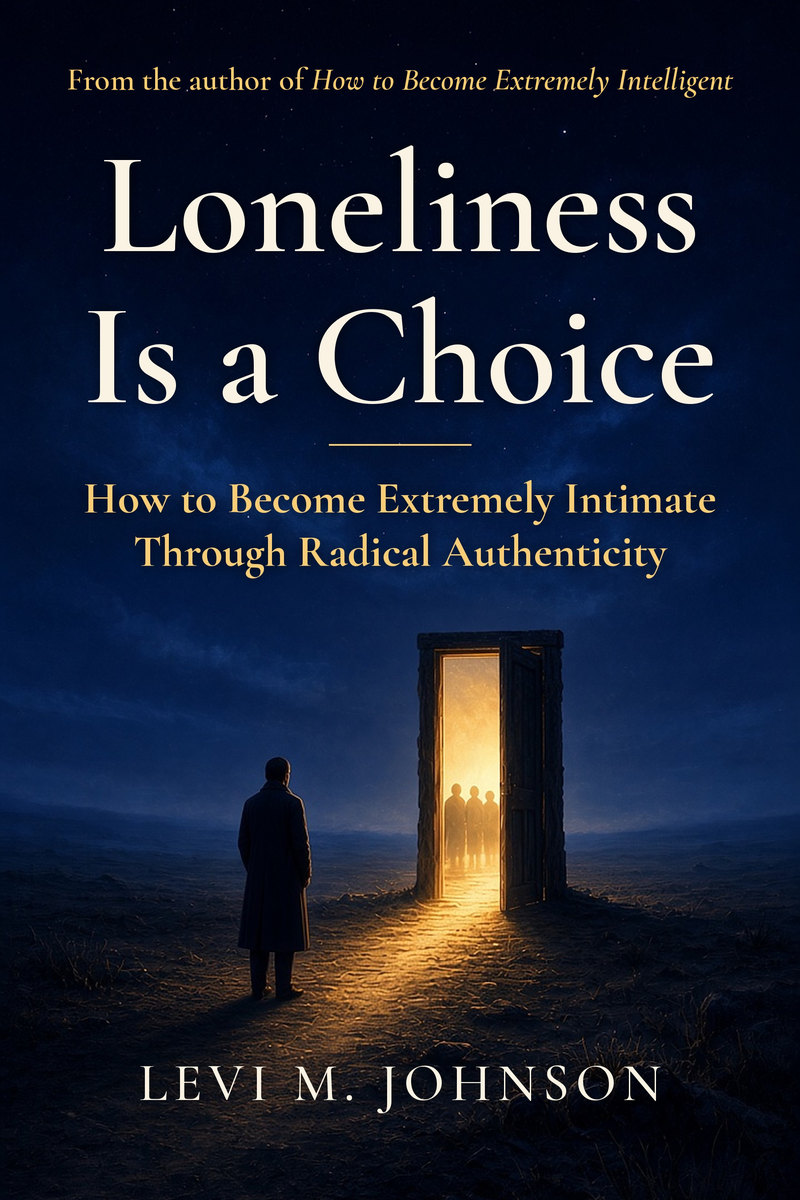
Levi M. Johnson knows that gap from the inside. In Loneliness Is a Choice, he describes leaving a trade that paid:
I began pursuing the life I actually wanted, saying yes to becoming a teacher and educator and now entrepreneurial author, rather than staying in construction, where I made relatively good money but felt empty.
Relatively good money, and empty. Both true at once. The money was real. It just wasn’t the thing that fills.
He has also put the order of things plainly, in a short note on Nostr:
Time is more important than money. Meaning is more important than both.
Which may be why the last question in the post, “how is it you were happier with less?”, is not the contradiction it sounds like. With less, something lay ahead. The reaching had a shape. In another note, Levi separates wanting from longing:
Happiness is, "I am responsible."
Want is resonance with a specific outcome you are responsible to achieve.
Longing is, "my happiness depends on it."
If the “more” was quietly carrying “my happiness depends on it,” then arriving there was always going to be strange. Happiness was never stored in the more, so reaching it could not hand happiness over. Whatever made the days with less happier, it was something other than the less. Either it came with you this far, or it stayed back there. The emptiness at this table may be the part of you that noticed.
Feeling empty is not the same as being ungrateful
The question that seems to weigh the most is the one in the middle: “How do you open up knowing how people will view your struggles with feeling empty when they see your life as their dream?”
It names a real bind. To the people looking in, the struggle can sound like a complaint about the very thing they are working toward. So the fear is that “I feel empty” will be heard as “I don’t appreciate what I have,” or worse, as “your dream is worthless.”
Those are three different sentences. Feeling empty in a full life is not despising the life. Someone can be grateful for every plate on the table and still notice that the table is lonely. Gratitude counts what is there. Emptiness notices what isn’t. Both can be honest at the same time, about the same table.
And “their dream” is a picture taken from outside. It can’t show the empty chairs. The distance between the life people see and the life you are living is a lonely place all its own, and it grows every time the outside picture is the only one anyone gets. In the same book, Levi names the direction of the work:
Part of the process of your maturation and integration is, in some sense, to bring the difference between your private self and public self to zero.
Seen that way, opening up asks no one to give up their dream. It lets one person see the inside picture too. Some will hear ingratitude, because the dream is all they can see. Others can hear “I have more than I imagined and I still feel empty” as exactly what it is, and those are the people who could sit at that table and make it less empty. Speaking is the only way to find out which is which.
Neighboring pages here: Surrounded by people that love me, but nobody really knows me, For years, work was my purpose, and Living for principles, living for happiness: where’s the peace?
Going deeper
Loneliness Is a Choice, by Levi M. Johnson, is about deeply authentic relationships with God, with other people, and with yourself, including the choice he made to leave a life that paid but didn’t fill. It is honest about what a gap between the outside and the inside costs:
You can’t fundamentally separate yourself from yourself.
Arriving is not the same as being filled. Feeling empty is not the same as being ungrateful. Both were already in five sentences someone wrote at a table that felt too big: the honesty to ask whether this is really how success feels, and the wish to be able to say so out loud to someone.
If one distinction helped, the book goes further into authenticity, closeness, and a life that fits who you are: Loneliness Is a Choice · Amazon → · Buy the ebook with Bitcoin (Lightning) → · Browse the books →
This page is part of answered needs at FikaTimeBooks.com — real questions, real answers, no squeeze.
Trade your email for the Introduction and Chapter 1 of the book you choose.
You'll receive the Introduction and Chapter 1 of the book you choose, plus occasional emails from FikaTimeBooks.com. Unsubscribe anytime. We never share your email.
Also on loneliness: Surrounded by people that love me, but nobody really knows me · For years, work was my purpose · Living for principles, living for happiness: where’s the peace? · More in Loneliness: Granular Insights